Category: Uncategorized

  • Marketing Ads: Types, Channels & How to Choose the Right One

    Marketing Ads: Types, Channels & How to Choose the Right One

    Most explanations of marketing ads do the same thing: they name every type, describe each one in a sentence or two, and stop there. You walk away knowing that search ads and display ads exist, but no clearer on which one fits your goal, your audience, or your budget.

    That's the gap this article closes. By the end, you'll know what the major ad types are, how they actually differ in mechanics and cost, and how to match a channel to what you're trying to accomplish — before you spend a dollar.

    Key Takeaways

    • Search ads reach people who are already looking to buy. They're among the higher-cost options per click, but that intent makes them one of the most direct paths to a lead or sale for many businesses.
    • Display ads are cheap per impression but rarely convert cold audiences. They work best for retargeting — reaching people who already know you — not for introducing your brand to strangers.
    • Your marketing objective should determine your ad type, not the other way around. Picking a platform because it's familiar, or because an agency recommended it, is how budgets get wasted.
    • Budget fit matters more than budget size. A well-targeted $500 paid search campaign for a niche keyword can outperform a $5,000 display campaign with no audience strategy.
    • Measuring the wrong metrics is just as costly as running the wrong ads. Tie every number you track to a business outcome — clicks and impressions in isolation don't tell you if the campaign is working.

    What Marketing Ads Are — and How They Fit Into Marketing Strategy

    Marketing ads are paid, intentional messages placed in front of a defined audience to achieve a specific business objective. That's what separates them from organic or earned channels: you pay for the placement, you control the message, and you're targeting a particular group of people with a particular goal in mind.

    Here's an important distinction worth making early: advertising is one component of a broader marketing strategy, not a synonym for it. Marketing includes your positioning, your pricing, your content, your relationships, your SEO — advertising is the paid lever within that larger system. Treating ad spend as a substitute for strategy is one of the most common and expensive mistakes businesses make.

    Every ad, regardless of format or channel, has four things in common: a defined audience, a message, a placement, and a goal. Those four elements are what any ad decision should be built around. A Google search ad targeting "emergency HVAC repair" and a billboard on a commuter highway are both advertising — but their audience stage, objective, and mechanics couldn't be more different. Understanding that difference is the starting point for making smart channel decisions.
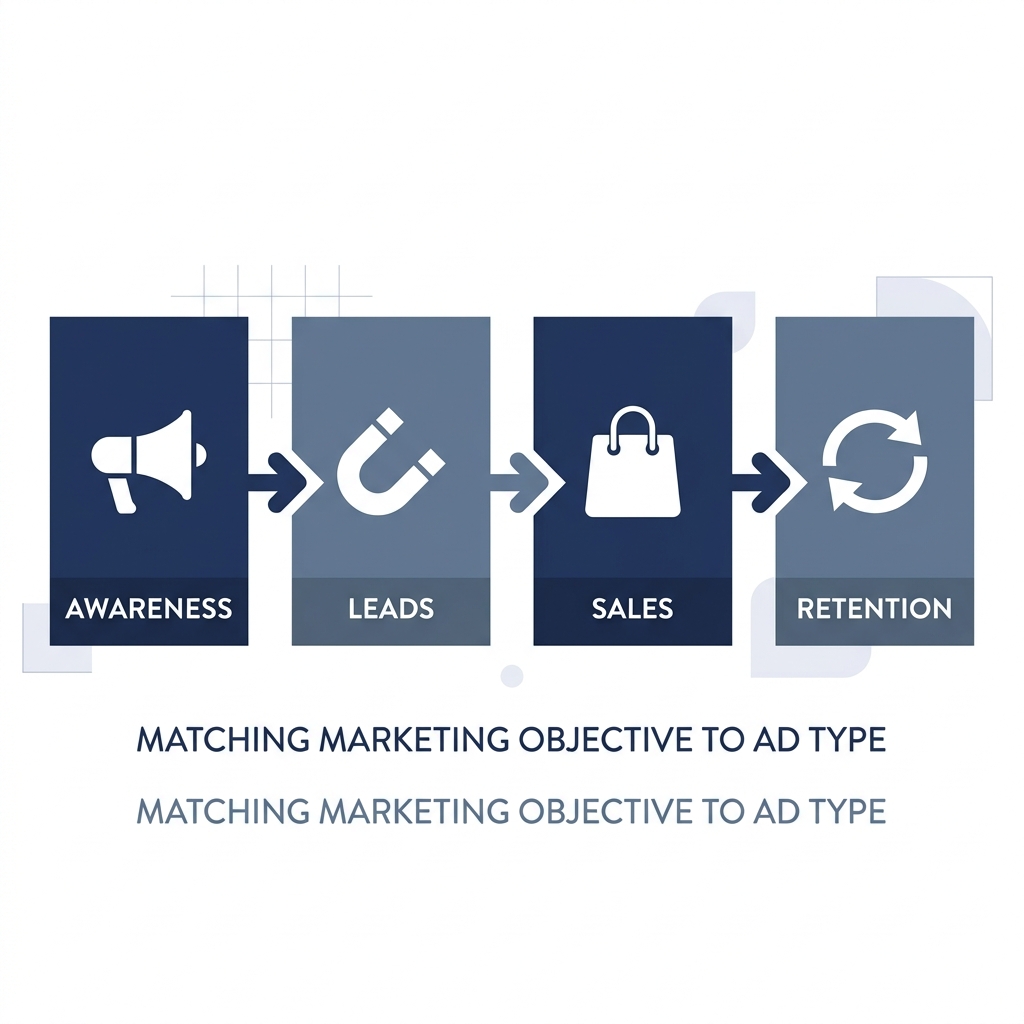

    Minimalist infographic showing four marketing ad objectives — awareness, leads, sales, and retention — as a left-to-right flo

    The Major Types of Marketing Ads

    Six ad types account for the vast majority of paid advertising investment. Here's what each one actually does — and more importantly, when it's worth using.

    Search Ads

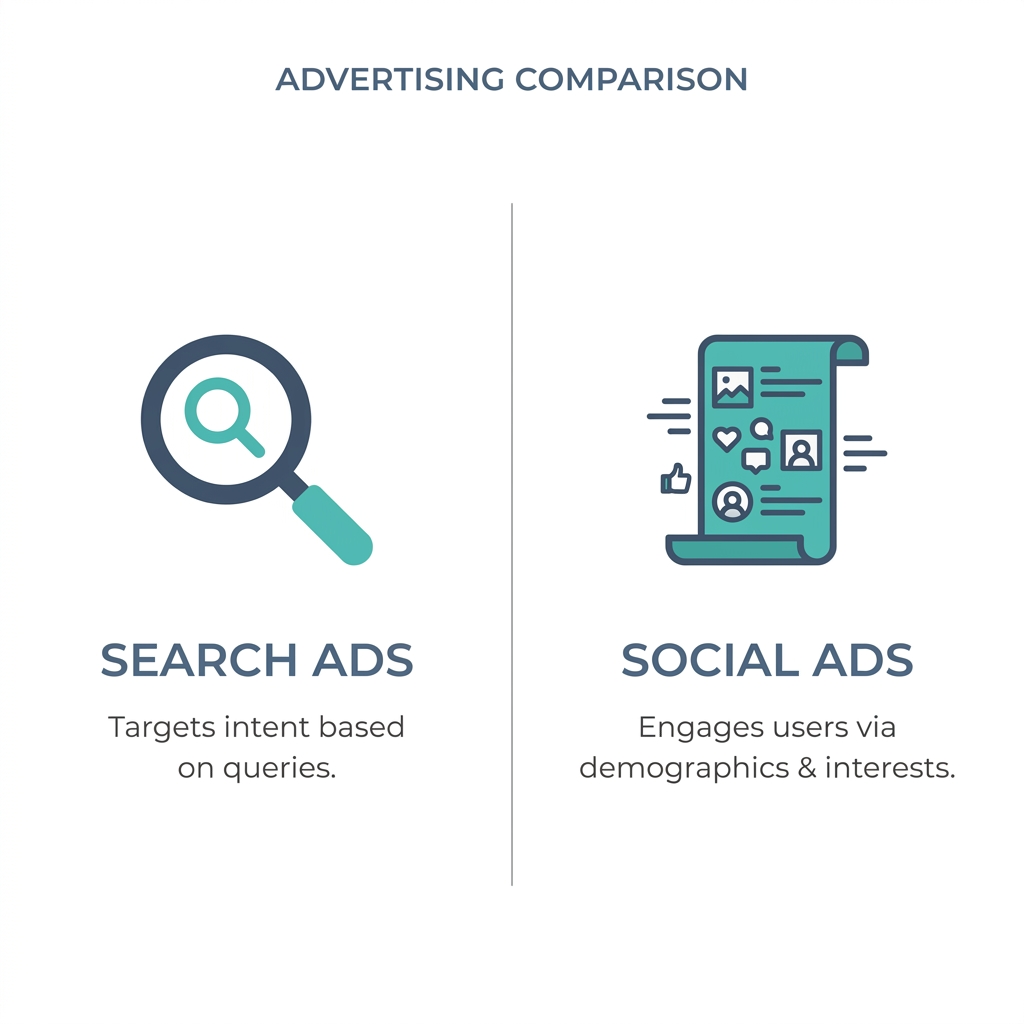
    Search ads appear when someone types a query into Google or Bing. They're text-based, priced on a cost-per-click (CPC) model, and they show up at the moment of expressed intent.

    That intent is what makes them valuable. When someone types "emergency HVAC repair," they're not browsing — they're ready to act. A search ad puts you in front of that signal. No storytelling required, no creative production investment. The tradeoff is cost: competitive keywords can run $5–$50+ per click depending on industry, and you need enough volume and conversion infrastructure to make the math work.

    Social Media Ads

    Meta (Facebook and Instagram), LinkedIn, TikTok, and similar platforms sell ads based on audience characteristics rather than search intent. You're not reaching someone who just typed what you sell — you're reaching people who fit a profile: age, location, interests, behaviors, or professional attributes.

    A Meta ad can target 35-year-old homeowners within a 20-mile radius who follow home improvement accounts — before they know they need your service. That's powerful for awareness and consideration, and for retargeting people who've already visited your site. Pricing is typically CPM (cost per thousand impressions) or CPC, and it fluctuates based on audience competition and creative quality.

    Display and Banner Ads

    Display ads are visual placements — images, graphics, or animated banners — that appear across websites, apps, and Google's Display Network. They reach broad audiences at a relatively low CPM, which makes them efficient for brand awareness and especially for retargeting.

    The catch: display ads serve people who aren't actively searching for what you offer. Cold-audience display campaigns rarely convert well. Use them to stay visible to people who already know you, not to introduce yourself to strangers.

    Video Ads

    Video ads run on YouTube, connected TV, and streaming platforms. They're priced on CPV (cost per view) or CPM, and they excel when the message benefits from demonstration, narrative, or emotional connection — things a text ad or static image can't deliver.

    Brand recall and storytelling are the natural use cases. Video isn't the right choice if your immediate goal is a direct-response conversion from a cold audience, but it's hard to beat for building familiarity and preference over time.

    Native and Sponsored Content

    Native ads are designed to blend with the editorial environment where they appear — sponsored articles, recommended content widgets, in-feed placements. The lower intrusion format tends to build more trust than a banner ad screaming for attention.

    They work best at the consideration stage, with audiences who are already somewhat aware of the category but haven't committed to a solution. Cost is typically CPM, and performance depends heavily on how well the content itself serves the reader.

    Traditional Ads (TV, Radio, OOH, Print)

    Television, radio, outdoor/billboard placements, and print advertising offer scale and local market reach that digital channels can't match in certain contexts. The tradeoffs are real: production costs are high, attribution is difficult, and minimum budgets for meaningful reach can be substantial. These channels remain relevant for brands with larger budgets or specific local presence goals — but for most businesses evaluating paid advertising for the first time, they're not the entry point.

    Ad Types at a Glance

    Here's how the major ad types compare. Use this as a quick reference — not a final verdict, since your objective and audience should drive the final call.

    Ad TypePrimary ObjectiveAudience StageRelative CostBest For
    Search AdsConversion / Lead GenDecisionMedium–High CPCCapturing active, high-intent demand
    Social Media AdsAwareness / RetargetingAwareness–ConsiderationVariable CPM/CPCReaching defined audiences before they search
    Display / Banner AdsBrand Awareness / RetargetingAwarenessLow–Medium CPMRetargeting warm audiences across the web
    Video AdsBrand Recall / StorytellingAwareness–ConsiderationVariable CPM/CPVMessages that need demonstration or emotion
    Native / SponsoredTrust BuildingConsiderationMedium CPMConsideration-stage audiences who resist hard sells
    Traditional (TV/Radio/OOH)Mass Reach / Local ScaleAwarenessHigh flat / CPMBrands needing broad reach or local saturation

    How to Match Ad Type to Your Marketing Objective

    Most businesses choose an ad channel because it's familiar or because someone recommended it. That's the wrong starting point. The right starting point is your objective — what you actually need the campaign to accomplish.

    Four objectives cover the vast majority of business advertising goals:

    Brand Awareness — You need people who've never heard of you to know you exist. The right tools here are display, video, and social reach campaigns. Prioritize impressions, reach, and frequency. Clicks and conversions are the wrong metrics at this stage.

    Lead Generation — You need a defined pool of potential customers to express interest. Search ads, social lead-form campaigns, and retargeting are the primary tools. Measure cost per lead and lead quality, not just volume.

    Sales and Conversion — You need direct revenue from the campaign. Search ads, shopping ads (where product-based), and retargeting are the most direct paths. ROAS and cost per acquisition are the metrics that matter.

    Retention and Loyalty — You need existing customers to return or expand their relationship with you. Email and retargeting are the most efficient channels here — paid social and display can reinforce this, but at lower priority than other objective types.

    If you want someone who has never heard of you to consider your service, a search ad won't help much — they aren't searching yet. A social awareness campaign or video ad makes more sense at that stage. This sounds obvious when stated directly, but most businesses make the opposite mistake daily.

    For a deeper look at whether paid search specifically makes sense for your situation, evaluating whether PPC is the right fit for your business is worth reading before committing budget.

    ObjectiveBest Ad Type(s)Why It FitsWhat to Measure
    Brand AwarenessDisplay, Video, Social ReachBroad reach, low CPM, visual format builds recognitionImpressions, Reach, Frequency, Brand Lift
    Lead GenerationSearch, Social Lead Forms, RetargetingCaptures intent or re-engages warm audiencesCPL, Lead Quality, Lead-to-Customer Rate
    Sales / ConversionSearch, Shopping, RetargetingHigh intent or pre-warmed audience reduces wasted spendROAS, CPA, Revenue Attributed
    Retention / LoyaltyEmail, Retargeting, SocialEfficient re-engagement of existing relationshipsRepeat Purchase Rate, LTV, Engagement Rate

    What Makes a Marketing Ad Actually Work

    Knowing which ad type to use is necessary but not sufficient. Two businesses can run the same ad type on the same platform with the same budget and get completely different results. The difference usually comes down to five factors.

    Targeting precision. Reaching the right audience is the foundation. A broad, untargeted campaign burns budget regardless of how good the creative is. Define your audience by behavior, intent, or specific demographic signals — not just general demographics. "Adults 25–54" is not a targeting strategy.

    Creative and message relevance. The ad must match what the audience cares about at that specific moment in their decision process. An awareness-stage audience needs a reason to pay attention. A decision-stage audience needs a reason to choose you over an alternative. Mismatch here — even with perfect targeting — kills campaigns.

    Offer and CTA clarity. Vague calls to action produce vague results. "Learn more" underperforms against "Get a free estimate" or "See pricing" in almost every context. The more specific and relevant the CTA, the more likely the audience is to take the action.

    Landing page alignment. The post-click experience must match the ad's message and format. If your ad promises a specific outcome but the landing page is a generic homepage, you've broken the reader's trust and wasted the click. Landing page misalignment is one of the most common and most avoidable sources of wasted spend.

    Testing and iteration. Effective ads are rarely first drafts. Plan for A/B testing from launch — not as a later fix when performance disappoints. One creative, one audience, one landing page tested in isolation tells you very little. Structured testing builds the data that improves performance over time.

    Before You Launch: Elements of an Effective Marketing Ad

    • [ ] Targeting is defined by audience behavior or intent, not just broad demographics
    • [ ] Ad creative matches what the audience cares about at this specific stage of their decision
    • [ ] The offer or call to action is specific and clear — not "learn more" or "visit our website"
    • [ ] The landing page matches the ad's promise in both message and format
    • [ ] A/B testing is planned from launch — not added as an afterthought when results disappoint
    • [ ] Success metrics are defined before the campaign goes live, not after

    What Marketing Ads Cost — and How to Think About Budget

    Cost is one of the most common reasons businesses delay paid advertising — and also one of the most misunderstood. Here's how to think about it.

    Ad pricing follows a few distinct models:

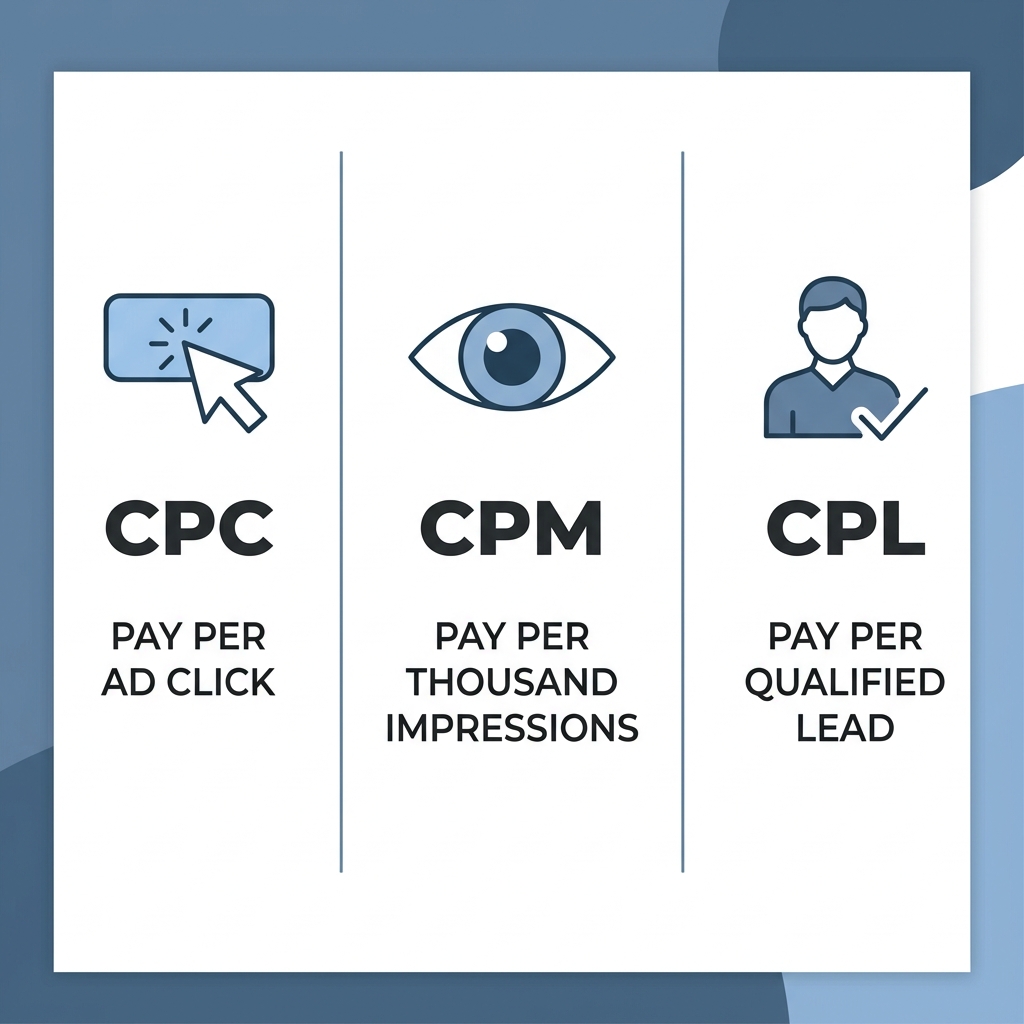
    • CPC (cost per click) — you pay when someone clicks your ad. Common in search and some social campaigns.
    • CPM (cost per thousand impressions) — you pay for exposure, regardless of clicks. Common in display, video, and social reach campaigns.
    • CPV (cost per view) — you pay when someone watches your video ad past a threshold. Common on YouTube.
    • CPL (cost per lead) — you pay per qualified lead generated. Common in some social lead-form campaigns.
    • Flat rate — you pay a fixed fee for a placement, regardless of performance. Common in traditional and sponsorship advertising.

    Cost varies enormously by channel, industry, and targeting. A legal or insurance keyword on Google can run $50+ per click. A niche B2B keyword in a low-competition category might run $1.50. Same platform — fundamentally different cost environment. According to industry benchmark data from WordStream, average CPCs vary significantly by industry, which is why channel cost estimates without industry context are often misleading.

    Digital advertising as a category continues to grow — the IAB's digital ad revenue reporting provides useful context on where spend is concentrating across channels, which reflects where audiences are paying attention.

    ChannelPricing ModelTypical RangeKey Variable
    Google Search AdsCPC$1–$50+ per clickIndustry and keyword competition drive the range significantly
    Meta / Social AdsCPM or CPC$5–$30 CPM / $0.50–$3 CPCAudience targeting and creative quality affect cost
    Display / ProgrammaticCPM$0.50–$5 CPMLow cost, lower intent — better for retargeting than cold conversion
    Video (YouTube)CPV / CPM$0.03–$0.30 per viewSkippable vs. non-skippable affects rate
    Traditional TV / RadioFlat / CPMWide variance — local to national scaleAttribution is difficult; large minimum budgets common
    OOH / BillboardsFlat rate$250–$14,000+/monthLocation and market size drive the range

    Ranges above are approximate industry benchmarks. Actual costs depend on your industry, targeting parameters, and competitive landscape.

    Budget fit matters more than budget size. A $500/month search campaign targeting a niche, high-intent keyword can outperform a $5,000 display spend with no targeting discipline. Starting small with search or social allows for real learning before scaling — and that's the practical entry point for most businesses evaluating paid advertising for the first time.

    One other cost factor worth naming directly: if you're running paid search through an agency, the pricing model matters. Agencies that charge a percentage of ad spend have a structural incentive to grow your budget — whether or not that growth produces proportional results. A flat-fee management model removes that incentive entirely, aligning the agency's interests with your outcomes rather than your spend level.


    How to Measure Whether Your Marketing Ads Are Working

    Most businesses measure what's easy to see — clicks, impressions, reach — rather than what's meaningful. That's not a data problem. It's a framing problem.

    The right metrics depend entirely on your campaign objective. Applying conversion metrics to an awareness campaign, or measuring impressions for a lead-gen campaign, produces noise rather than insight.

    Awareness campaigns: Track reach, impressions, frequency, and brand lift. Clicks and conversions are the wrong metrics here — you're trying to build recognition, not close a sale. If you're running a video campaign, view-through rate and completed views are more meaningful than click-through rate.

    Lead generation campaigns: Track cost per lead (CPL), lead quality (what percentage of leads are actually qualified), and the lead-to-customer conversion rate. A campaign that generates 200 leads at $5 each but closes zero is not a good campaign — it's a lead quality or sales process problem.

    Sales and conversion campaigns: Track return on ad spend (ROAS), cost per acquisition (CPA), and revenue directly attributed to the campaign. Google's own guidance on ROAS and campaign metrics is a useful starting point for understanding how these are calculated within a platform context.

    A campaign with a high click-through rate but a 0% landing page conversion rate isn't a successful campaign. It's a targeting or landing page problem wearing a performance metric as a disguise.

    Define your success metrics before the campaign launches. Retroactive benchmarking — deciding what "good" looks like after you've seen the results — distorts evaluation and makes it easy to rationalize underperformance.

    Campaign ObjectivePrimary MetricSecondary MetricWhat It Tells You
    Brand AwarenessReach / ImpressionsFrequency / Brand LiftHow many people saw it and how often
    Lead GenerationCost Per Lead (CPL)Lead Quality / Qualification RateWhether the campaign attracts the right people at sustainable cost
    Sales / ConversionROAS / CPARevenue AttributedWhether the campaign is generating profitable revenue
    Retention / LoyaltyRepeat Purchase RateEngagement Rate / LTVWhether existing customers are re-engaging

    If you're already running Google Ads and not confident your current reporting is showing you the full picture, a performance audit can surface where spend is going and what's actually driving results — without requiring any commitment to change. That's a useful first step before adjusting strategy or budget.


    How Marketing Ads Fit Into a Broader Marketing Strategy

    Paid advertising generates traffic and visibility quickly. But that traffic stops the moment you stop spending. That's not a flaw — it's a structural characteristic worth understanding before you allocate budget.

    Organic strategies — SEO, content, building long-term organic authority through backlinks and search equity — take longer to gain traction but compound over time. A well-ranking page continues generating leads months after the content was published. Paid ads don't work that way.

    The most practical approach uses both: paid ads to generate immediate reach and test messaging, organic investment to build durable, compounding visibility. Paid campaigns can surface which messages resonate with which audiences — information that makes content and SEO strategy more targeted and efficient.

    Neither channel is universally better. The right proportion depends on the business's current stage, goals, and timeline. A business that needs leads next month has different needs than a business investing in positioning for the next two years. If you're still evaluating whether paid search makes sense as an entry point, understanding whether PPC fits your current business situation is a reasonable next step before committing budget.

    Paid Advertising vs. Organic Marketing

    FactorPaid AdvertisingOrganic / Long-Term Marketing
    Speed to resultsImmediate — traffic starts when the campaign goes liveSlow — typically 3–12 months to meaningful traction
    Cost structureOngoing spend required to maintain resultsUpfront investment; lower marginal cost over time
    SustainabilityStops when budget stopsCompounds — results persist and grow with continued effort
    Control over messagingHigh — you control placement, copy, and targetingModerate — subject to algorithm and search intent shifts
    MeasurabilityDirect attribution available for most digital channelsAttribution is harder; multi-touch models required

    Ready to Put This Into Practice?

    If you're evaluating whether paid search is worth the investment, the right starting point is a clear-eyed look at whether the channel fits your objective, your audience, and your current budget — not a decision made under pressure from an agency recommendation.

    Tailored Marketing manages Google Ads for small-to-mid-sized businesses on a flat monthly fee — not a percentage of your ad spend. That structure means there's no incentive to grow your budget for its own sake. Contracts are month-to-month with no setup fees and a first-month refund if it's not a fit.

    If you're not running ads yet and want to think through whether paid search makes sense for your goals, start with a conversation about whether PPC fits your business — no commitment required.

    If you're already running Google Ads and want to know whether your spend is working, ask about a performance audit. It's a straightforward review of where budget is going and what's actually producing results.


    What is the difference between marketing and advertising?

    Marketing is the broader discipline — it includes positioning, pricing, content, relationships, and strategy. Advertising is one paid component within that system. Running ads without a marketing strategy is like running a sales process without knowing who you're selling to or why they should choose you.

    Which type of marketing ad is best for small businesses?

    Search ads are often the most practical starting point because they reach people who are already looking for what you offer. But the real answer depends on your objective. If no one is searching for your category yet, a social awareness campaign may make more sense. Match the channel to the goal, not to platform popularity.

    How much should I spend on marketing ads?

    There's no universal answer, but starting small is almost always smarter than starting large. A focused $500–$1,000/month search campaign in a niche category can produce real data about cost per lead and conversion rate. Use that data to decide whether and how much to scale — not assumptions made before a campaign runs.

    What is a good return on ad spend (ROAS)?

    It depends on your margins and business model. A 3:1 ROAS (three dollars of revenue for every dollar of ad spend) is a common reference point, but a business with thin margins may need 6:1 to be profitable, while a high-margin service business might be comfortable at 2:1. Define your breakeven ROAS before the campaign launches, not after.

    What is the difference between paid ads and organic marketing?

    Paid ads generate immediate traffic and stop the moment you stop spending. Organic marketing — SEO, content, backlinks — builds visibility over months but compounds over time and doesn't disappear when you stop paying. Both have legitimate roles; the right balance depends on how quickly you need results and what your long-term investment horizon looks like.

    How do I know if my marketing ads are working?

    Match your metrics to your objective. Awareness campaigns should be evaluated on reach and frequency — not conversions. Lead-gen campaigns should be evaluated on cost per lead and lead quality — not click-through rate. Conversion campaigns should be evaluated on ROAS and cost per acquisition. If you're measuring clicks on an awareness campaign and calling it a success, you're measuring the wrong thing.

    How do I choose the right ad channel for my goal and budget?

    Start with your objective: are you building awareness, generating leads, or driving direct sales? Then ask where your audience is in their decision process. If they're actively searching, search ads reach them at the right moment. If they don't know they need you yet, social or display campaigns reach them earlier. Budget should come last — not as the first filter.

  • How to Choose a Marketing Company for Ads | Buyer’s Guide

    How to Choose a Marketing Company for Ads | Buyer’s Guide

    If you've ever sat through an agency pitch and thought, they all sound exactly the same, you're not wrong. Most agency proposals hit the same notes: proven methodology, award-winning team, data-driven results. Then you sign, the honeymoon period ends, and you're left staring at a dashboard you don't understand, wondering if anything is actually being optimized.

    Choosing the wrong marketing company for your ads is expensive — not just in the management fees you pay, but in the ad budget that runs while little meaningful work happens in the background. And yet most buyers choose based on surface signals: confidence in the pitch, a polished deck, a few client logos. The structural questions — who owns my accounts? how do they make money? what happens if I leave? — come later, usually after something goes wrong.

    This article gives you a practical framework to work through before you sign anything. We'll cover what marketing companies actually do when they manage your ads, how to tell agency types apart so you can self-qualify before reaching out, what the evaluation process should look like, what everything costs, and which red flags to screen for in any proposal.


    Key Takeaways

    • Running ads and managing ads are not the same thing. A marketing company that's genuinely managing your campaigns is doing ongoing, hands-on optimization — not just launching and watching.
    • Agency type matters more than agency reputation. A performance specialist and a full-service firm serve different goals. Hiring the wrong type — even a good one — usually produces disappointing results.
    • Agency compensation models affect incentives, not just cost. When an agency earns a percentage of your ad spend, they make more money when your budget grows — whether or not that growth improves your returns. A flat fee removes that misalignment.
    • Account ownership is non-negotiable. You should own your Google Ads account from day one. If you leave the relationship and lose your account history, that's a structural problem, not standard practice.
    • Good reporting answers one question clearly: is this working? If your monthly report doesn't answer that directly, it's being written for the agency's benefit, not yours.

    What a Marketing Company Actually Does When Managing Your Ads

    Here's a direct-answer version before we get into the detail: a marketing company managing your ads is responsible for campaign structure, bid strategy, audience and keyword targeting, ongoing optimization, and performance reporting — typically across one or more paid channels like Google Ads, Meta, or LinkedIn. They should be doing active, recurring work on your campaigns, not simply keeping them running.

    That distinction — active management versus passive placement — is worth making explicit, because a lot of businesses have paid for the latter while expecting the former.

    What Active Ad Management Actually Looks Like

    Take a week of Google Ads management as an example. A hands-on agency is typically doing some combination of the following:

    • Reviewing the search terms report to identify irrelevant queries and adding negative keywords
    • Adjusting bids at the keyword, audience, or device level based on recent performance data
    • Monitoring budget pacing to make sure spend is distributed appropriately across the campaign period
    • Checking conversion tracking for data integrity issues (missing conversions, double-counting)
    • Running or evaluating A/B tests on ad copy, landing page variants, or audience segments
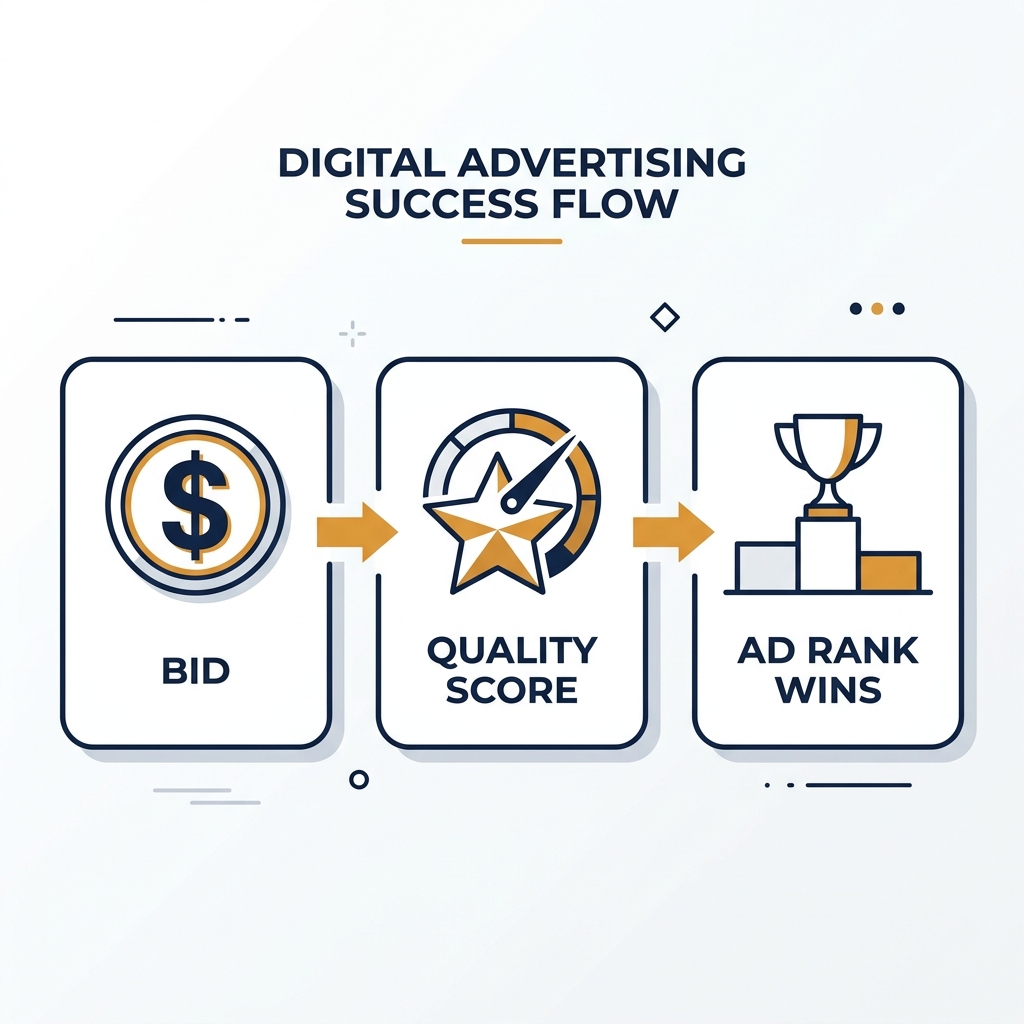
    • Checking Quality Scores and ad relevance signals — Google's auction and quality scoring system means that better-structured campaigns often pay less per click for the same position

    Now contrast that with what a campaign looks like when it's running but not being managed: stale audiences that haven't been refreshed in months, no negative keyword additions since launch, bids set to default and never revisited, and a report that shows impressions and clicks but nothing tied to actual business outcomes.

    Both scenarios can produce a monthly invoice. Only one of them is actually managing your ads.

    Which Channels Marketing Companies Typically Manage

    Most marketing companies that specialize in paid advertising work across some combination of:

    • Google Ads (paid search, Shopping, Performance Max) — the most common starting point
    • Meta Ads (Facebook and Instagram) — dominant for consumer brands and awareness-stage goals
    • LinkedIn Ads — more common for B2B campaigns with longer sales cycles
    • Programmatic and display — typically handled by larger agencies or dedicated media buyers

    Not every agency manages every channel. A paid search specialist may have limited depth on Meta, and vice versa. That mismatch is a real buying risk — more on that in the evaluation section.

    A Note on Account Ownership

    Before we go further: you should own your ad account, not your agency. This means the account is created under your business's Google account, you have admin access, and if the relationship ends, you leave with your full campaign history — keywords, bids, audience data, and conversion history — intact. This point comes up repeatedly in agency evaluation because some agencies still build campaigns inside their own manager accounts and retain control at the end of a relationship. That's not standard practice; it's a structural advantage for the agency.

    What's Typically Included vs. What May Not Be

    • Usually included: Campaign setup and restructuring, keyword research, bid management, negative keyword maintenance, A/B testing coordination, budget pacing, audience refinement, conversion tracking verification, monthly performance reporting
    • Often excluded or priced separately: Ad creative production (copy, design, video), landing page development or optimization, SEO or organic channel management, CRM integration setup, brand strategy

    If you're evaluating an agency and aren't sure what's in scope, ask for a written breakdown before the engagement starts. Scope ambiguity is one of the most common sources of disappointment in agency relationships.


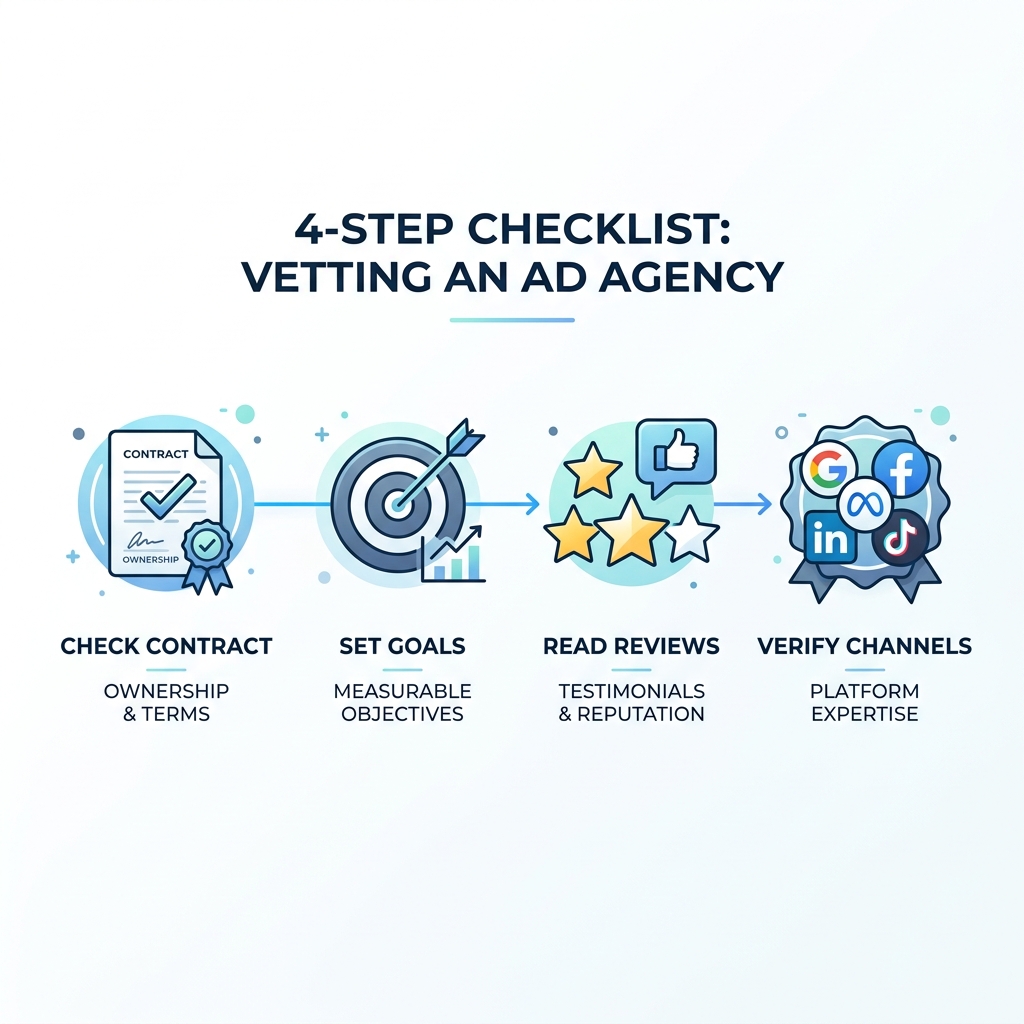
    Four-step checklist infographic for vetting a marketing company before signing — account ownership, defined goals, third-part

    Types of Marketing Companies That Run Ads — And Which One Fits Your Situation

    The phrase marketing company covers a wide range of business models. Treating them as interchangeable is one of the main reasons buyers end up with the wrong fit. Here's an honest breakdown of the four types most relevant to paid advertising.

    Full-Service Agency

    Full-service agencies handle multiple channels under one roof — paid media, organic search, creative, sometimes PR or influencer. The appeal is a single point of contact who can coordinate across channels. The tradeoff is depth: a full-service firm may have specialists in multiple disciplines, but their paid search team may not go as deep as a firm that does only paid media. If your primary goal is strong Google Ads performance and you don't need bundled services, a full-service firm can be a more expensive path to a narrower outcome.

    Some full-service agencies also bundle paid ads with organic and SEO services like backlink building — worth asking about explicitly if you want paid and organic strategies working in parallel.

    Performance or Paid-Media Agency

    Performance agencies specialize in paid channels — paid search, paid social, sometimes programmatic — with a focus on measurable returns: ROAS, CPA, lead volume. They tend to have deeper channel expertise and more rigorous optimization processes than generalist firms. If you have specific, measurable performance targets and a clear channel in mind, a performance specialist is typically a better fit than a full-service firm.

    The tradeoff: they usually don't offer creative production, brand strategy, or organic channel management. If you need all of those things, you may need multiple vendors.

    Creative Boutique

    Creative boutiques are strong on strategy, messaging, and ad production — video, copy, visual identity. Their media buying and ongoing optimization capability varies significantly. A creative boutique can be a powerful complement if you have strong ad management in place and need better creative. As a standalone ad management solution, most businesses will find the optimization depth insufficient.

    Freelancer or In-House Hybrid

    A freelance media buyer or an in-house hire brings lower cost and direct access. The honest tradeoffs: limited capacity during high-demand periods, no team redundancy if they're unavailable, and no institutional knowledge transfer if they leave. This is a legitimate option — especially for businesses with straightforward campaigns and predictable goals — but it requires more internal oversight and carries more operational risk than a structured agency relationship.

    Agency Type Comparison

    Agency TypeBest ForTypical Monthly Management FeeKey Tradeoff
    Full-Service AgencyBusinesses that want a single partner managing paid, organic, and creative across multiple channels$5,000+ per monthBroader scope, but channel depth on any single channel (e.g., paid search) may be lower than a specialist
    Performance / Paid-Media AgencyBusinesses with specific, measurable paid channel goals (ROAS, CPL, CPA) and clear budget for one or two channels$1,500–$5,000+ per monthStronger optimization depth, but typically no creative production or organic services
    Creative BoutiqueBusinesses that already have ad management in place and need stronger creative strategy and productionVaries widely; project-based commonAd production strength, but media buying and ongoing optimization rigor is inconsistent
    Freelancer / In-House HybridBusinesses with simpler campaigns, tighter budgets, and capacity to provide internal oversight$500–$1,500 per monthLower cost and direct access, but limited capacity, no redundancy, and higher operational risk

    Note: Ranges above are market estimates. Actual fees vary based on scope, channel mix, and agency size.


    How to Evaluate a Marketing Company Before You Sign Anything

    Most agencies are good at looking credible. The ones that are hard to evaluate are often — not always, but often — designed to be hard to evaluate. Vague guarantees, opaque reporting structures, and long lock-in contracts are not accidental features. They protect the agency from accountability.

    Here's what rigorous due diligence looks like in practice.

    Account Ownership

    Confirm in writing that you own the ad accounts and will retain full access — including all historical data — if the relationship ends. This should be a non-negotiable term in any contract. If an agency hesitates on this, that hesitation is your answer.

    How They Define Success Before You Sign

    Any agency worth hiring should be able to tell you, before you sign: what metrics they'll optimize toward, what a realistic improvement timeline looks like at your budget level, and what they'd consider a successful first 90 days. If the answer is vague — "we'll see how the campaigns perform and adjust" — push harder. A real methodology has specifics attached to it.

    Third-Party Reviews vs. Agency-Controlled Testimonials

    Testimonials on an agency's own site are curated. Start your reference check with independent platforms like Clutch or Google Reviews, where reviews are harder to filter. Look for patterns across multiple reviewers — not just the star rating, but what clients say about communication, reporting transparency, and how disputes were handled.

    Channel-Specific Experience

    Ask for case studies in your vertical and on your specific channel. A strong Google Ads team is not the same as a strong Meta Ads team. "We helped a B2B SaaS client reduce CPL by 40% on LinkedIn" is interesting but mostly irrelevant if you're an ecommerce brand trying to improve Google Shopping performance. Specificity is the signal.

    Compensation Model and Incentive Alignment

    This is a structural question, not just a cost question. When an agency charges a percentage of ad spend — typically 10–20% — their monthly revenue increases when your budget increases. That incentive doesn't always align with your interest in efficient returns. A flat-fee model keeps the agency's income stable regardless of budget changes, which removes the push-spend incentive.

    Illustration: Two agencies managing the same $10,000/month Google Ads budget. Agency A charges 15% of spend ($1,500/month). Agency B charges a flat $1,200/month. You ask both whether you should increase budget to $15,000. Agency A earns an additional $750/month if you do. Agency B's income doesn't change. That's not a small difference in incentive structure — it's a meaningful one.

    Contract Length and Exit Terms

    An agency confident in their work should not need a 12-month contract to retain clients. Month-to-month arrangements — or short-term agreements with clear exit terms — are a real signal that an agency is willing to be held accountable on results rather than on contractual obligation. If the answer is "we require a minimum 12-month commitment," ask what performance benchmarks are built into that commitment and what the exit clause looks like if those benchmarks aren't met.

    Pre-Signing Checklist: Questions to Ask Every Marketing Company

    Before you sign with any marketing company, get clear, specific answers to these questions:

    • [ ] Do I own my ad accounts? Will I have full admin access and retain all account history if we end the relationship?
    • [ ] How do you define success for my specific goal, channel, and budget — and what does that look like in the first 90 days?
    • [ ] Can you share case studies from clients in my vertical, running the same channel I'm planning to use?
    • [ ] How is reporting structured? What decisions should I be able to make after reading my monthly report?
    • [ ] How do you charge — flat fee, percentage of ad spend, or another model — and why?
    • [ ] What is your client retention rate, and can I speak with a current or recent client?
    • [ ] What are the minimum ad spend requirements, and what is the total monthly cost of engagement (management fee plus estimated ad spend)?
    • [ ] What is the contract length, and what are the exit terms if results don't materialize?
    • [ ] What does your onboarding process look like — do you audit existing accounts before making recommendations?

    What Marketing Company Ad Management Should Cost — And What Drives the Price

    Most agencies don't publish pricing, and that's not an accident. Walking into a pricing conversation without any framework puts you at a disadvantage. Here's enough orientation to self-qualify before you start talking to anyone.

    Common Pricing Models

    Retainer (flat monthly fee): A fixed management fee regardless of ad spend volume. Creates stable, predictable costs for the client and removes budget-inflation incentives for the agency.

    Percentage of ad spend: Agency fees scale with your monthly budget — typically 10–20%. Simple to calculate, but structurally creates an incentive to grow spend. This is the most common model at mid-size and larger agencies.

    Flat fee per channel: A fixed fee per platform managed. Useful when scope is clearly defined and unlikely to shift.

    Performance-based: Agency earns based on results — leads generated, revenue attributed. Rare in practice; more common as a hybrid component of a larger retainer. Be cautious: performance-based arrangements require clear, agreed measurement that both parties trust.

    What the Pricing Model Means Beyond the Dollar Amount

    When an agency earns a percentage of ad spend, scaling your budget from $10,000 to $15,000/month is, financially, in their interest — whether or not that additional $5,000 in spend produces proportionally better results. That's not necessarily bad behavior; it's a structural incentive that a thoughtful buyer should understand before signing.

    A flat-fee model works differently: the agency's income is stable across budget changes, so their motivation to recommend a budget increase should be grounded in performance data, not revenue opportunity.

    Directional Cost Reference

    Agency TypeTypical Management FeeTypical Minimum Ad SpendNotes
    Freelancer / Solo Contractor$500–$1,500 / monthOften $1,000–$3,000 / monthDirect access, limited capacity; variability is high
    Boutique Performance Agency$1,500–$3,500 / monthOften $3,000–$5,000 / monthSpecialist depth on 1–2 channels; less creative support
    Mid-Size Agency (performance or full-service)$3,500–$7,500 / monthOften $5,000–$10,000+ / monthBroader capability; team depth; longer onboarding cycles
    Large or Full-Service Agency$7,500+ / monthOften $10,000–$20,000+ / monthEnterprise capability; significant overhead in fee structure

    These are market estimates for directional orientation only. Actual pricing varies significantly by agency, scope, and geography. Always get a written scope-of-work before comparing fees.

    A $500/month management fee typically implies a limited engagement — limited time, limited channel depth, limited optimization frequency. A $3,500/month retainer should imply a more intensive engagement with clear deliverables. Neither is inherently right or wrong; the question is whether the price aligns with the scope and your actual goals.


    Red Flags to Watch For in Agency Proposals and Pitches

    The following aren't edge cases — they show up regularly in agency proposals. Recognizing them isn't cynicism; it's due diligence.

    Vague Success Guarantees

    "We guarantee results." Ask immediately: what result? By when? Measured how? A credible agency can answer all three clearly. If the follow-up is vague — "we guarantee you'll see improvement" — that's not a guarantee, it's a sales phrase. A guaranteed ROAS or guaranteed top-3 ranking that doesn't come with a written definition, a timeline, and a clear explanation of the variables the agency controls (and doesn't control) should be treated as a red flag, not a selling point.

    Agencies That Retain Account Ownership

    If an agency says the account will be built and managed under their Google Ads manager account, and they won't commit in writing to transferring access if the relationship ends — stop. This is the clearest structural red flag in agency relationships. Your account history, conversion data, and audience signals have real monetary value. Leaving them behind when you switch agencies means starting over.

    Projected Results Without a Baseline Audit

    No credible agency can project meaningful results without reviewing your current account structure, existing performance data, and competitive landscape first. If an agency is promising "we'll double your leads in 60 days" in the first pitch meeting — before they've looked at anything — that confidence is not a good sign. It's a sales tactic.

    Long Lock-In Contracts Without Performance Benchmarks

    A 12-month contract with no defined performance milestones and no meaningful exit clause is structured to protect the agency, not the client. If an agency is asking for a long commitment, ask what happens if agreed benchmarks aren't met at month three or six. If there's no good answer, the contract length is a risk signal.

    Vague or Unverifiable Case Studies

    "We helped a client triple their revenue." Which client? What channel? What was the baseline? What was the budget? Legitimate case studies have specifics. Vague attribution claims — especially without industry context or channel relevance to your situation — are not evidence of expertise.

    Agency Proposal Red Flag Checklist

    • [ ] Success is "guaranteed" but without defined metrics, timeline, or measurement method
    • [ ] Account will be managed under the agency's account; ownership transfer on exit is unclear or denied
    • [ ] Specific result projections offered before any audit of your current account or campaigns
    • [ ] Contract requires 12+ months with no defined performance benchmarks or exit clause
    • [ ] Case studies lack client industry context, specific channels, or measurable outcomes
    • [ ] Agency references all come from their own website rather than independent platforms
    • [ ] Compensation is percentage-of-spend with no discussion of how budget increase recommendations are handled
    • [ ] Reporting is described as frequent or comprehensive without any explanation of what decisions the reports will support

    What to Realistically Expect in the First 90 Days

    Results take time. That's a real thing, not just an agency excuse — but there's an important distinction between results taking time and confusion about results lasting indefinitely. A good agency can always explain what they're doing, why, and what success looks like at each stage. If they can't, the problem is accountability, not the algorithm.

    The Learning Phase Is Real

    Most ad platforms — Google Ads in particular — have a learning phase of roughly two to four weeks when a new campaign launches or is significantly restructured. During this period, the algorithm is optimizing delivery based on early performance signals. Expecting week-one results to represent steady-state performance sets up an unfair comparison. Expecting no explanation of what's happening during that period — or no baseline to compare against — is a reasonable expectation that should be met.

    30/60/90-Day Milestone Timeline

    PhaseWhat Should HappenWhat You Should Be Able to See
    Month 1 (Days 1–30)Account audit, campaign setup or restructure, conversion tracking verification, baseline benchmarkingA written account of what was inherited, what was changed, and why — plus initial performance data against baseline
    Month 2 (Days 31–60)Active optimization cycle begins: bid adjustments, audience refinement, negative keyword expansion, early creative testingDirectional improvement trends; clear explanation of what's being tested and why; any tracking or data issues surfaced
    Month 3 (Days 61–90)Continued optimization; early performance conclusions from A/B tests; budget allocation reviewMeasurable movement on primary KPIs (ROAS, CPA, lead volume, CTR); a clear statement of what's working, what isn't, and what comes next

    What Metrics to Track — By Channel

    For ecommerce campaigns: ROAS, CPA, conversion rate, revenue attributed to paid channels, and new-customer acquisition rate.

    For lead-generation campaigns: cost per lead (CPL), lead volume, lead quality signals (if your CRM tracks downstream conversion), and form completion rate.

    Industry benchmark data from WordStream provides useful reference ranges for average ROAS and CPA by industry — helpful context for setting realistic expectations before you start any agency engagement, rather than accepting an agency's projections at face value.

    Before the engagement starts, agree in writing on which metrics matter, what baseline you're measuring from, and what meaningful improvement looks like at your budget level. If that conversation is hard to have before signing, imagine how hard it will be three months in.

    When to Stay vs. When to Switch

    If by the end of month three you cannot get a clear explanation of what's been optimized, what was changed and why, and what the next 30 days of work looks like — that's a performance problem. Not a learning phase. A genuine learning curve produces explainable decisions and measurable directional data. Indefinite learning-phase language without supporting evidence is a different thing entirely.

    If you want to pressure-test whether paid search is even the right channel for your business before committing to an agency evaluation, this overview of when PPC is likely to work is a useful starting point.


    What does a marketing company actually do when it runs your ads?

    A marketing company managing your ads handles campaign setup and structure, bid strategy, keyword and audience refinement, negative keyword maintenance, budget pacing, A/B test coordination, and performance reporting. Active management means ongoing, recurring optimization work — not just launching campaigns and monitoring dashboards.

    What is the difference between a marketing company and an advertising agency?

    In practice, the terms are often used interchangeably for businesses that manage paid ad campaigns. The meaningful distinction is between agency types — full-service, performance/paid-media specialist, creative boutique — rather than between the labels marketing company and advertising agency. What matters is the specific services in scope, the channels they specialize in, and how they measure results.

    How much does it cost to hire a marketing company to run ads?

    Management fees vary significantly by agency type and scope. Freelancers and solo contractors typically charge $500–$1,500/month; boutique performance agencies typically charge $1,500–$3,500/month; mid-size agencies typically charge $3,500–$7,500/month or more. Most agencies also require a minimum monthly ad spend separate from their management fee. The pricing model — flat fee vs. percentage of spend — matters as much as the dollar amount, because it affects the agency's incentives.

    Do I own my ad accounts when working with a marketing company?

    You should — but not all agencies structure it that way. Your ad account should be created under your own Google account with the agency given access as a manager, not the reverse. If the relationship ends, you should retain full access to the account, including all campaign history, audience data, and conversion history. Confirm this in writing before signing anything.

    How long does it take to see results from a marketing company running ads?

    Most ad platforms have a learning phase of two to four weeks when new campaigns launch. Directional improvement typically becomes visible in weeks four through eight, with more meaningful optimization outcomes by the end of month three. Results depend heavily on budget, channel, competitive landscape, and starting point. Any agency projecting specific outcomes before auditing your current situation is making promises they can't reasonably support.

    How do I compare agencies when every one claims to be top-rated or award-winning?

    Ignore self-reported credentials and look for independently verifiable signals: reviews on third-party platforms like Clutch or Google Reviews, channel-specific case studies with measurable outcomes in your vertical, and the clarity and specificity of their answers to structural questions (account ownership, reporting, contract terms). An agency that handles due-diligence questions directly and without deflection is demonstrating accountability before you've even signed.

    Should I hire a marketing company or run ads in-house?

    It depends on your goals, budget, and internal capacity. In-house management gives you direct control and eliminates management fees, but requires real platform expertise and ongoing time investment. Agency management provides specialist depth and team redundancy, but adds cost and requires clear accountability structures. The freelancer/in-house hybrid is a middle path with genuine tradeoffs. There's no universally right answer — the right choice depends on what your team can realistically execute and what level of oversight you can provide. —

    Start With a Low-Risk Evaluation

    If you're actively evaluating marketing companies right now, the decision doesn't have to feel like a gamble.

    The criteria in this article — account ownership, compensation model, contract flexibility, reporting clarity — give you a framework to compare agencies on substance rather than surface signals. Most buyers don't use this framework because most agencies don't encourage it. That's worth paying attention to.

    For businesses evaluating Google Ads specifically, Tailored Marketing offers a flat-fee management model with no setup fees, month-to-month terms, and a first-month refund — not because those are unusual features, but because they reflect what an agency that's confident in its work should be willing to offer.

    If you'd like a second opinion on your current campaigns — or want to understand what a real audit of your account would surface before committing to any agency — a no-pressure consult is a practical first step. It's a conversation, not a commitment.

  • Digital Advertising: Types, Channels, and How to Choose the Right One

    Digital Advertising: Types, Channels, and How to Choose the Right One

    Most people searching for information about digital advertising already know it exists. What they don't know is which channel to use, why their past campaigns underperformed, or whether the budget they have is enough to generate real results.

    That's the gap this article is designed to fill. You'll find a plain-English explanation of what digital advertising is (and how it differs from digital marketing), a breakdown of every major channel with honest notes on when each one works and when it doesn't, a framework for matching your business goal and budget to the right channel, and a clear-eyed look at what most beginner campaigns get wrong.

    Definitions come first, but we move past them quickly. The goal is a decision you can act on — not a vocabulary lesson.


    Key Takeaways

    • Digital advertising is paid placement across digital channels — search, social, display, video, and more. It's one component of digital marketing, not a synonym for it.
    • Search advertising captures buyers who are already looking for what you sell. Social advertising reaches people who aren't searching yet. These are fundamentally different jobs, and conflating them is expensive.
    • Most entry-level budgets work best concentrated on one channel. A $1,000/month budget produces useful data on one channel and nothing useful on three.
    • CPC, CPM, and CPA are pricing models, not performance indicators. The model you choose should match your campaign goal — clicks, reach, or conversions.
    • Most failed campaigns fail for one of three reasons: conversion tracking wasn't installed, the landing page didn't match the ad, or the budget was too small to generate real data.
    • Privacy changes — particularly Apple's App Tracking Transparency and third-party cookie deprecation — are reshaping targeting. First-party data and contextual targeting are the most resilient response.

    What Digital Advertising Actually Is (And What It Isn't)

    Digital advertising is paid placement across digital channels — search engines, social platforms, websites, apps, and streaming services — designed to reach a specific audience and prompt a specific action. You pay to appear. The moment you stop paying, you stop appearing.

    That distinguishes it sharply from digital marketing, a broader category that includes SEO, content marketing, email, and organic social. Those channels build presence over time without a direct per-placement cost. Digital advertising trades money for immediate visibility.

    A concrete example: running a Google Search ad for "emergency plumber" is digital advertising. Writing a blog post that ranks organically for that same phrase is digital marketing. Both can drive a call — but they work differently, on different timelines, and with different cost structures. Treating them as the same thing leads to budget misallocation and unrealistic expectations.

    Digital AdvertisingDigital Marketing
    ScopePaid placement only — search, social, display, video, native, programmaticFull mix — paid ads plus SEO, content, email, organic social
    Cost modelPay per impression (CPM), per click (CPC), or per conversion (CPA)Mixed — paid channels plus time and content investment for organic
    Speed to resultsImmediate — ads can appear and generate traffic the same day they launchLong-term — organic channels typically take months to build meaningful traffic
    Primary goalDrive a specific, measurable action with a defined audience nowBuild brand authority, search visibility, and audience relationships over time

    For businesses weighing paid placement against organic search strategies, the decision usually isn't either/or — but understanding what each one does is essential before committing budget to either.

    According to the IAB's 2024 digital advertising revenue report, digital ad spend in the United States continues to outpace every other media category — a useful signal that the infrastructure is mature and that audiences are genuinely reachable through these channels, even if choosing the right one still requires judgment.


    Simple infographic comparing search advertising versus social advertising by intent level.

    The Major Digital Advertising Channels (And When Each One Actually Works)

    The biggest mistake in choosing a digital advertising channel is treating all of them as interchangeable options. They aren't. Each channel is built for a specific stage of audience intent, and using the wrong one for your goal is one of the most common ways to waste an ad budget.

    Search Advertising (Google Ads, Microsoft Ads)

    Search advertising captures people who are already looking for what you sell. When someone types "HVAC repair near me" or "accounting software for freelancers," a search ad can appear at the top of the results and connect them directly to your offer. The CPC model means you pay only when someone clicks.

    This intent-matching is search advertising's core advantage — and its core constraint. If no one is searching for your product or service, there's no demand to capture. A brand-new product category with zero search volume has nothing to bid on.

    For most small businesses pursuing direct response, search advertising is the right starting point — not because it's cheap, but because it works with demand that already exists. If you're evaluating whether paid search is the right channel for your business, the most important question is whether your customers are actively searching for what you offer.

    Social Media Advertising (Meta, LinkedIn, TikTok, Pinterest)

    Social advertising is built for discovery — reaching people who aren't actively searching for what you sell. Meta's targeting lets you reach users by interest, behavior, life event, and demographic. LinkedIn reaches professionals by job title, industry, and company size. TikTok reaches younger audiences through algorithmically surfaced content.

    This makes social advertising powerful for brand awareness and top-of-funnel demand generation. It's a poor fit if your primary goal is capturing buyers ready to convert today — those people are on search, not scrolling a feed.

    Display Advertising

    Display ads are banner and rich media placements across the web — shown to users as they browse news sites, recipe blogs, or any site on the Google Display Network. CPMs are typically low, which means broad reach at modest cost.

    But low CPM also means low intent. Display advertising is most effective for retargeting (re-engaging people who visited your site) and broad awareness campaigns. Don't confuse reach with readiness to buy.

    Video Advertising (YouTube, Connected TV/CTV)

    Video advertising spans YouTube pre-roll and non-skippable ads, as well as the rapidly growing connected TV category — ads served to streaming audiences on platforms like Hulu, Peacock, and Roku. Both formats are storytelling-oriented and effective for awareness.

    The constraint is creative. Video requires production investment. For businesses without video assets, search and text-based social formats are lower-friction starting points.

    Native Advertising

    Native ads match the look and feel of the surrounding editorial environment — sponsored articles, recommendation widgets, in-feed placements. They're non-disruptive, which makes them effective for discovery-stage audiences who tune out banner formats. Less effective for high-intent, conversion-focused campaigns.

    Programmatic Advertising

    Programmatic isn't a channel — it's a buying method. Demand-side platforms (DSPs) purchase ad inventory automatically through real-time auctions from supply-side platforms (SSPs) across the open web. Display, video, and native inventory can all be purchased programmatically.

    Programmatic is efficient at scale and offers sophisticated audience targeting. It is rarely worth running below $3,000–$5,000/month, and it requires expertise to manage effectively. For most small-to-mid-sized businesses, it's not the right starting point.

    Channel Comparison

    Here's how the major channels compare side by side:

    ChannelPrimary Intent ServedTypical Pricing ModelBest ForKey Limitation
    Search (Google Ads, Microsoft Ads)Active purchase or research intentCPCDirect response, lead generation, local servicesRequires existing search demand; no inventory without search volume
    Social (Meta, LinkedIn, TikTok)Passive discovery, demand generationCPM or CPCBrand awareness, top-of-funnel, B2B lead gen (LinkedIn)Lower purchase intent; harder to capture immediate conversions
    DisplayPassive browsing, retargetingCPMRetargeting, broad awareness at low costVery low intent; CTR is often 0.1–0.3%; easy to misread as underperforming
    Video (YouTube, CTV)Passive viewing, storytellingCPM or CPVBrand storytelling, awareness, audience that doesn't search yetRequires quality video creative; CTV minimum budgets can be high
    NativeDiscovery, editorial adjacencyCPM or CPCContent-adjacent discovery, audiences resistant to display formatsHarder to attribute direct conversions; works best with strong content
    ProgrammaticRetargeting, audience extension at scaleCPMScale-efficient inventory buying across display, video, nativeComplex to run well; not cost-effective below ~$3,000–$5,000/month

    How to Choose the Right Channel for Your Goal and Budget

    Most channel-selection mistakes happen because the choice is driven by what a platform offers, not what the business needs. The right framework starts with three questions: What is your goal? What is your audience's intent level right now? And is your budget large enough to generate real data on the channel you're considering?

    Here's how those variables map to channel recommendations:

    Business GoalAudience IntentBudget TierRecommended Channel(s)Why
    Direct response / lead generationActive searchEntry-level ($500–$1,500/mo)Search (Google Ads)Captures buyers already looking; CPC model keeps costs tied to clicks, not impressions
    Brand awarenessPassive discoveryEntry-level ($500–$1,500/mo)Social (Meta or TikTok)Broad reach by interest and demographic; CPM model is efficient for impressions at this budget
    Lead generation (B2B)Passive discovery, professional contextMid-range ($1,500–$5,000/mo)LinkedIn Ads + SearchLinkedIn's professional targeting justifies higher CPMs; pair with search to capture branded queries
    Retargeting existing visitorsRe-engagementEntry-level ($500–$1,500/mo)Display or Social retargetingLow CPMs make retargeting affordable; audience already knows you, so intent is warmer
    E-commerce product launchPassive discovery (no search volume yet)Mid-range ($1,500–$5,000/mo)Social (Meta) + Video (YouTube)No search demand exists yet; create it through discovery channels before capturing it on search
    Awareness at scalePassive viewingGrowth ($5,000+/mo)Programmatic, CTV, YouTubeScale and targeting sophistication justify the budget floor; below this level, signal is too thin

    A few honest constraints the table can't capture:

    Minimum viable budgets matter. Search campaigns need at least $500–$1,000/month to generate enough data to optimize. Social awareness campaigns at $200–$400/month produce reach figures that look encouraging but rarely yield enough conversion data to draw conclusions. Programmatic is rarely worth running below $3,000–$5,000/month.

    Creative resources are a real constraint. YouTube and CTV require video. If you don't have video assets and can't produce them, those channels aren't available to you regardless of budget. Search advertising and text-based social formats are lower-friction starting points for businesses without design resources.

    Small budgets should be concentrated. A $1,000/month budget produces something useful on one channel. Split across three channels, it produces noise on all of them. Start concentrated, generate meaningful data, then expand.

    If you're a local service business — plumber, HVAC contractor, dentist — with $800–$1,000/month, search advertising targeting high-intent keywords is almost always the right starting channel. Social and display awareness campaigns at that budget will generate impressions from people not ready to act.


    How Digital Advertising Works: Auctions, Targeting, and Pricing Models

    Understanding how digital ads are actually bought and served changes how you make decisions. Most digital advertising isn't purchased like a magazine ad — it's bought through automated auctions in fractions of a second.

    Direct vs. programmatic buying. Direct buying means negotiating a placement directly with a publisher (a specific website or media outlet). Programmatic buying means your ad is bid on automatically through a demand-side platform (DSP), which purchases inventory from supply-side platforms (SSPs) that represent publishers. Most digital advertising today — including most display and video — is purchased programmatically, even when buyers aren't aware of it.

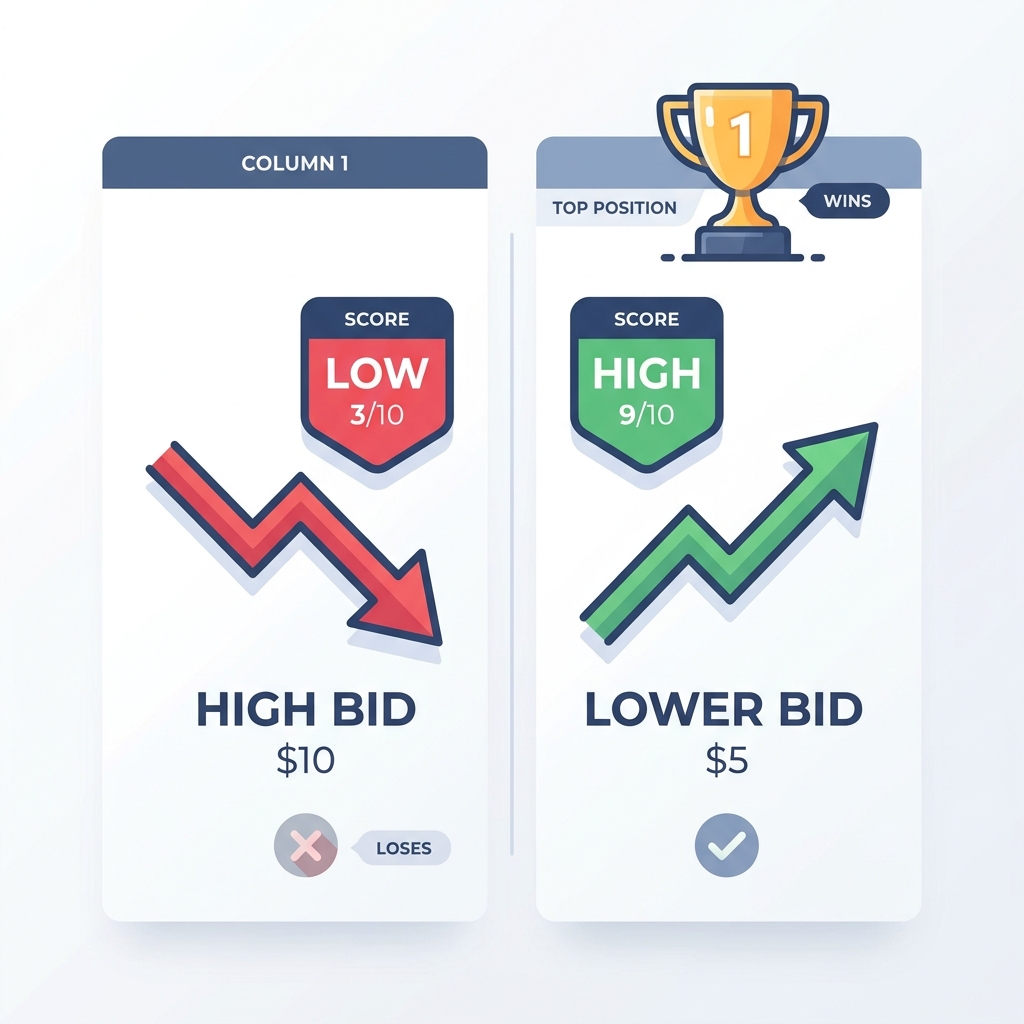
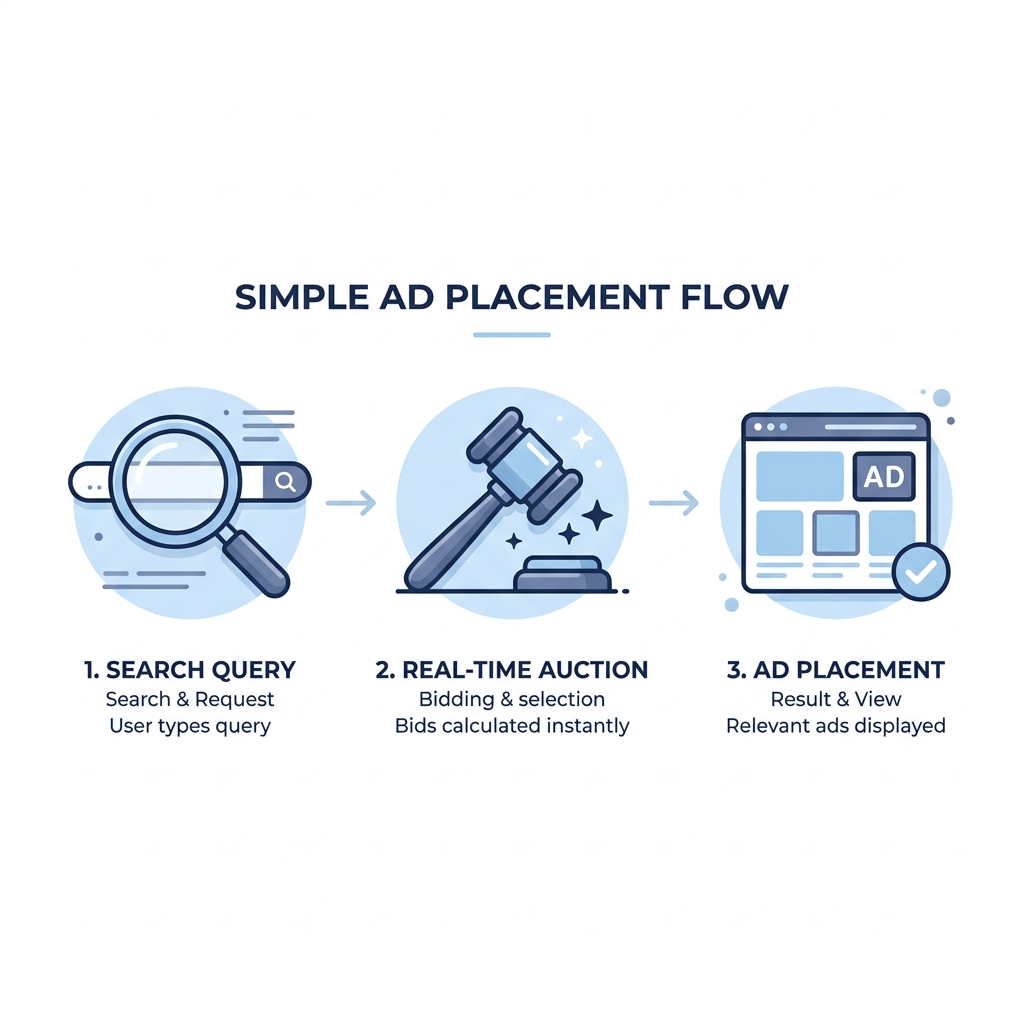
    Auction mechanics. Winning a placement isn't simply about the highest bid. In Google Ads, Quality Score — determined by expected click-through rate, ad relevance, and landing page experience — directly affects both your ad rank and what you pay per click. A well-structured ad with strong keyword-to-landing-page alignment can outrank a competitor bidding 30% more and pay less per click doing it. Treating digital advertising as a spending contest rather than a relevance contest is how advertisers consistently overpay.

    Targeting options in practice. The targeting methods available across platforms vary significantly:

    • Keyword targeting: search ads match to the query a user types — highest intent signal available
    • Interest and demographic targeting: social platforms infer intent from behavior, content consumption, and self-reported profile data
    • Retargeting: re-engages users who visited your site or app but didn't convert — warm audience, typically higher conversion rates
    • Custom audiences: upload a CRM list and match it to platform users — requires first-party data
    • Lookalike audiences: platforms identify users statistically similar to your best customers — effective but affected by privacy signal loss (more on that in the privacy section)
    • Contextual targeting: ads matched to page content, not user identity — privacy-resilient and increasingly effective as behavioral targeting degrades

    Pricing models and when to use each:

    Key Terms

    • CPC (Cost Per Click): You pay when someone clicks your ad. Best for direct response campaigns where you want to drive traffic and conversions. Keeps cost tied to engagement rather than impressions.
    • CPM (Cost Per Thousand Impressions): You pay per 1,000 times your ad is shown. Best for awareness campaigns where reach and visibility matter more than clicks.
    • CPA (Cost Per Acquisition): You pay per conversion, or set a target CPA and let the platform optimize toward it. Requires a minimum volume of conversions — typically 30–50 per month — before the algorithm has enough data to optimize effectively. Not a viable option for low-volume advertisers.
    • DSP (Demand-Side Platform): Software that automates the purchase of ad inventory across multiple ad exchanges — used by advertisers and agencies.
    • SSP (Supply-Side Platform): Software that helps publishers sell their ad inventory programmatically.
    • Retargeting: Showing ads to users who previously visited your site or interacted with your brand.
    • Lookalike Audience: A platform-generated audience of users who share characteristics with your existing customers or site visitors.
    • Programmatic: Automated, auction-based buying of digital ad inventory through DSP/SSP systems.

    Choose your pricing model based on your goal — not which sounds cheapest. CPM campaigns judged on conversion rates will always look bad. CPC campaigns running awareness creative will always look expensive.


    Measuring Digital Advertising Performance: KPIs and What Good Actually Looks Like

    One of the most common ways to mismanage a digital advertising campaign is measuring it with the wrong metric against the wrong benchmark. A display campaign with a 0.15% CTR isn't failing — that's a normal display CTR. Judging it by search CTR standards would lead you to cut a campaign that's actually doing its job.

    Engagement metrics measure whether your ad is being seen and noticed:

    • Impressions: How many times your ad was shown
    • Clicks: How many times users clicked
    • CTR (Click-Through Rate): Clicks divided by impressions — signals ad relevance and creative effectiveness
    • Reach: Unique users who saw the ad
    • Video Completion Rate: Percentage of viewers who watched through to the end

    These matter for diagnosing creative and targeting quality. They don't measure business outcomes.

    Conversion metrics are what actually drive budget decisions:

    • Conversion Rate: Percentage of clicks that result in a desired action (purchase, form submission, call)
    • CPA (Cost Per Acquisition): Total ad spend divided by total conversions — what you paid to get one customer or lead
    • ROAS (Return on Ad Spend): Revenue generated per dollar spent. A 4x ROAS means $4 in revenue for every $1 in ad spend.
    • ROI: Net profit relative to total investment, accounting for cost of goods and other factors beyond ad spend
    MetricWhat It MeasuresTypical Benchmark RangeWhat a Low Result SignalsWhat a High Result Signals
    CTR (Search)Ad relevance and query match3–5% average (varies by industry)Poor keyword-to-ad alignment; low relevanceStrong ad copy and keyword match
    CTR (Display)Creative visibility against passive audience0.1–0.3%Normal for the channel; only a problem if CPM is highAbove-average creative or very targeted placement
    CTR (Social)Audience-to-message resonance0.5–1.5% (format-dependent)Weak creative or audience mismatchCreative and targeting are well-aligned
    Conversion RateLanding page and offer effectivenessVaries widely by industry and channelLanding page, offer, or targeting problemStrong message-to-market fit
    CPACost efficiency of lead or sale generationHighly industry-specificOver-target: bidding, creative, or audience issueUnder-target: room to scale or a sign of data error
    ROASRevenue return per ad dollar2x–4x typical starting point; 4x+ for e-commerceAd spend exceeding revenue contributionProfitable scaling opportunity

    Benchmark data cited here is drawn from WordStream's 2025 Google Ads benchmark research, which breaks down CTR and CPA by industry and channel.

    Attribution matters when you're running multiple channels. Last-click attribution gives 100% of the conversion credit to the final touchpoint before a purchase — straightforward, but misleading when earlier touchpoints (a YouTube awareness ad, a social post) influenced the decision. Multi-touch attribution distributes credit across touchpoints but requires more setup and platform access to implement. The practical implication: if you're running awareness campaigns alongside direct-response campaigns and judging everything on last-click, you'll consistently undervalue upper-funnel spend and cut it prematurely.


    Common Beginner Mistakes That Kill Digital Advertising Campaigns

    Most campaigns that fail aren't evidence that digital advertising doesn't work. They're evidence that one or more of the following things went wrong — almost always before the first dollar of ad spend was placed.

    Not installing conversion tracking before spending. This is the single most expensive mistake. Without conversion tracking, you can't see which keywords, ads, or audiences are generating results. Every optimization decision you make after that is a guess. Install it, verify it, and confirm it's firing before any campaign goes live.

    Mismatching landing pages to ad creative or audience intent. An ad promising a specific discount that sends users to the homepage — or a search ad for a specific service that lands on an "About Us" page — destroys conversion rates regardless of how good the targeting is. The ad creates an expectation. The landing page either fulfills it or it doesn't.

    Under-budgeting to the point of meaninglessness. A $100/month budget in a competitive Google Ads market might generate five clicks. You cannot make optimization decisions from five clicks. If your budget can't generate at least 50–100 clicks per month on a focused keyword set, you don't have enough data to optimize — you're just spending.

    Spreading a small budget across too many channels. This produces noise everywhere and insight nowhere. Start on one channel, generate data, learn what works, then consider adding a second channel.

    Ignoring negative keywords in search campaigns. Without a negative keyword list, your search ads will match to irrelevant queries and burn budget on traffic that was never going to convert. Reviewing the search terms report in the first two weeks of a campaign is non-negotiable. This isn't an optional optimization — it's basic setup.

    Accepting platform defaults without review. Google's broad match, Meta's Advantage+ audience expansion, and similar defaults are designed to maximize inventory consumption — not your conversion rate. They are a good starting point only if you review and narrow them. Leaving them as-is means you're letting the platform decide who sees your ads.

    If you've run Google Ads and seen poor results, the diagnostic usually starts here: Was conversion tracking installed and verified? Did the landing page match the ad's specific promise? Was the keyword match type set to broad without negative keywords? In most underperforming campaigns, one of these is the culprit. If you'd rather have someone else run that diagnostic, a Google Ads audit is a low-stakes way to find out what's actually going wrong.

    Before you launch, confirm each of these:

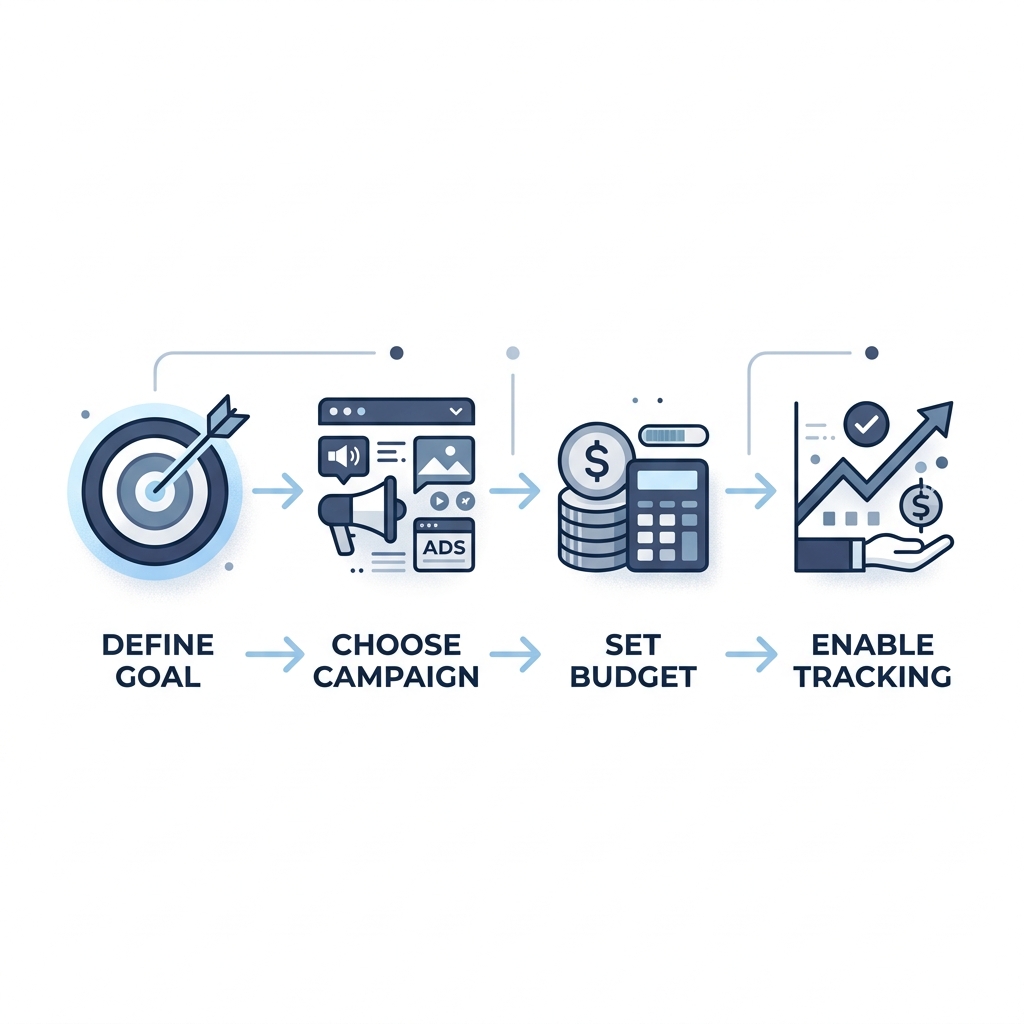
    • [ ] Conversion tracking is installed and verified before any spend begins
    • [ ] Landing page matches the specific ad offer and audience intent — not just the general category
    • [ ] Budget is sufficient to generate at least 50–100 clicks per month on a focused keyword set
    • [ ] Campaign is not spread across multiple channels simultaneously at entry-level budget
    • [ ] Negative keyword list is built and reviewed before search campaigns go live
    • [ ] Targeting parameters have been reviewed and narrowed from platform defaults
    • [ ] Success metrics are defined before launch — not determined after the fact based on what looks good

    Privacy Changes and What They Mean for Digital Advertising Targeting

    Anyone evaluating or running digital advertising right now is operating in a different targeting environment than existed three years ago. Two changes in particular have had material impact on how digital ads are targeted, measured, and optimized.

    Third-party cookie deprecation. Browsers are phasing out the third-party cookies that have powered much of behavioral targeting, cross-site retargeting, and attribution measurement in display and programmatic advertising. When a user visits multiple websites, third-party cookies have historically allowed advertisers to build audience profiles and serve retargeting ads across those sites. As that infrastructure degrades, audience segmentation, frequency capping, and attribution accuracy for display-heavy campaigns all become less reliable.

    Apple's App Tracking Transparency (ATT). Introduced in 2021, Apple's ATT framework requires apps to request explicit user permission before tracking activity across other companies' apps and websites. The majority of users have declined. This has significantly reduced the conversion signal available to Meta and other social platforms — particularly for iOS users. ROAS figures reported in Meta Ads Manager are now systematically understated for that segment, because attributed conversions that happened on iOS devices are underreported.

    The practical response: first-party data.

    • Email lists and CRM data belong to your business — they're unaffected by cookie deprecation or ATT
    • Website pixel audiences (visitors who came to your site) are built on your own infrastructure, not third-party cookies
    • Customer match lists (uploading your CRM to Google or Meta to match against platform users) are a durable targeting signal that doesn't depend on third-party tracking
    • Lookalike audiences built from first-party data remain more reliable than those built from platform-inferred behavioral signals
    • First-party data is a targeting asset that becomes more valuable as industry-wide signal degrades — investing in it now creates a durable competitive advantage

    Contextual targeting — placing ads based on the content of the page they appear on, not the identity of the viewer — is immune to cookie deprecation and has shown renewed effectiveness as behavioral targeting degrades. It's not a replacement for all behavioral methods, but for display and native placements, it's the most privacy-resilient targeting approach available.

    Privacy changes are not the end of digital advertising. They're a structural shift that rewards businesses with strong first-party data assets and penalizes those who relied entirely on third-party behavioral targeting. Build better data infrastructure now.


    Conclusion: Match the Channel to the Goal

    Digital advertising gives you precise control over who sees your message and when — but that precision is only useful if you start with the right channel for the right goal. Search advertising captures demand that already exists. Social advertising creates demand with audiences who aren't looking yet. Display and programmatic extend reach efficiently at scale. None of these is universally better. The right one depends on your business goal, your audience's intent level, and a budget large enough to generate real data.

    Most campaigns that underperform don't fail because digital advertising doesn't work. They fail because the channel didn't match the goal, the budget was too thin to optimize, or the conversion tracking wasn't in place to measure anything.

    If you're starting from scratch — or starting over after a disappointing experience — and you want paid search managed without a percentage-of-spend incentive structure, Tailored Marketing offers flat-fee Google Ads management with month-to-month contracts, no setup fees, and a first-month refund guarantee. It's a low-risk way to get started with someone who has an incentive to make your campaigns work, not to grow your ad spend. Schedule a consult to talk through whether it's the right fit.


    What is digital advertising and how is it different from digital marketing?**?

    Digital advertising is paid placement across digital channels — search engines, social platforms, websites, apps, and streaming services — where you pay for visibility based on impressions, clicks, or conversions. Digital marketing is a broader category that includes digital advertising plus unpaid tactics like SEO, content marketing, email, and organic social. Digital advertising delivers immediate visibility; those other channels build long-term presence. The two work best together, but they operate on different timelines and cost structures.

    Which digital advertising channel should I start with for my business goal and budget?**?

    For most small businesses pursuing direct response (leads, calls, purchases), search advertising is the right starting point — it captures buyers who are already searching for what you sell. If you're launching a new product with no search demand, or building brand awareness, social advertising is a better fit. Programmatic and CTV make more sense at $3,000+/month. Start with one channel, generate data, then expand.

    How much does digital advertising cost for a small business?**?

    Search campaigns (Google Ads) are viable starting at $500–$1,000/month in most local markets — enough to generate meaningful data on a focused keyword set. Social awareness campaigns need at least $1,000–$1,500/month to generate enough conversion data to optimize. Programmatic rarely makes sense below $3,000–$5,000/month. The issue isn't whether digital advertising is affordable — it's whether the budget you have is sufficient for the channel you're considering.

    What is programmatic advertising and do I need it?**?

    Programmatic advertising is an automated method for buying display, video, and native ad inventory across the open web through real-time auctions. A demand-side platform (DSP) bids on your behalf across inventory made available by supply-side platforms (SSPs). It's efficient at scale and offers sophisticated audience targeting, but it's complex to manage and rarely cost-effective below $3,000–$5,000/month. Most small businesses don't need it — search and social will serve them better at entry-level budgets.

    How do I know if my digital advertising is working?**?

    Compare your results to channel-appropriate benchmarks. Search ads typically see 3–5% CTR; display is normal at 0.1–0.3%. Conversion metrics — CPA and ROAS — matter more than engagement metrics for business decisions. If you don't have conversion tracking installed, you can't answer this question at all — that's the first thing to verify. Set your success metrics before launch, not after.

    How have privacy changes affected digital advertising targeting?**?

    Apple's App Tracking Transparency (ATT) reduced the conversion signal available to social platforms like Meta for iOS users, causing reported ROAS to be understated. Third-party cookie deprecation is degrading behavioral targeting and cross-site retargeting in display and programmatic. The most resilient response is investing in first-party data — email lists, CRM data, website pixel audiences, and customer match lists — which are unaffected by these changes. Contextual targeting (matching ads to page content, not user identity) is also gaining effectiveness as a privacy-safe alternative.

  • PPC Explained: How the Auction Works, What It Costs & When It Pays Off

    PPC Explained: How the Auction Works, What It Costs & When It Pays Off

    Most beginner PPC guides explain what "pay-per-click" means but skip the part that actually determines whether you make money or waste it: the auction.

    Every time someone searches a keyword you're bidding on, Google runs a real-time auction in milliseconds. That auction sets how much you pay per click — and the result is not just about who bids the most. A business bidding $2.00 can beat a competitor bidding $3.00 and pay less per click doing it. That's not a quirk — it's the system working exactly as designed. But if you don't understand how it works, you end up on the wrong side of that equation.

    This article covers three things: how the auction actually prices clicks, what those clicks realistically cost by industry, and how to decide whether PPC belongs in your marketing mix right now.


    Key Takeaways

    • Ad Rank, not just bid, determines your position. A Quality Score of 9 can win the top spot over a competitor with a higher bid but weaker relevance — and pay less per click in the process.
    • CPC ranges vary wildly by industry. Legal and finance keywords can run $6–$30 per click on Google Ads; ecommerce keywords often run under $2. Your industry determines your baseline before you've set a single bid.
    • Broad match keywords without a negative keyword list will drain your budget. This is the single most common beginner mistake — and it's not a minor tuning issue, it's a structural one.
    • PPC and SEO serve different timelines. PPC delivers traffic the day your campaign goes live; SEO compounds over months. Which one fits your situation depends on your goals, margin, and how fast you need results.
    • Before spending anything, install conversion tracking. Without it, you'll have no way to connect clicks to customers — and every other metric becomes meaningless context.

    What Pay-Per-Click Advertising Actually Is

    Pay-per-click advertising is a model where you pay only when someone clicks your ad — not when it's shown. That distinction matters.

    The alternative model, CPM (cost per thousand impressions), charges you for exposure regardless of whether anyone engages. PPC flips that: your ad can appear 1,000 times and you pay nothing. The moment someone clicks, you pay. A plumber bidding on "emergency plumber near me" might have their ad shown to 500 searchers in a day but receive only 25 clicks — they pay for 25 clicks, not 500 impressions.

    Where PPC ads appear:

    • Google Ads — text ads at the top and bottom of search results; the default starting point for most businesses chasing purchase intent
    • Microsoft Ads (Bing) — same search-intent model, lower competition, often 20–30% cheaper CPC, smaller audience
    • Meta Ads (Facebook/Instagram) — interruption-based; targets audiences by demographics and behavior rather than search intent; better for awareness and remarketing than direct conversion
    • Amazon Advertising — product-level ads inside Amazon search results; purpose-built for ecommerce with buyers already in purchase mode

    What ties all of these together is the keyword or audience trigger concept: your ad doesn't run on random pages or at random people. It shows because someone searched a specific term, fits a specific audience profile, or has visited your site before. That targeting precision is what makes PPC expensive relative to display advertising — and what makes it valuable when set up correctly.

    The cost of each click isn't a fixed rate you negotiate with Google. It's set by a real-time auction every single time someone searches. Understanding that auction is the difference between a campaign that works and one that burns through budget with nothing to show for it.


    Infographic comparing high bid with low Quality Score versus lower bid with high Quality Score in a PPC auction.

    How the PPC Auction Works: Ad Rank, Quality Score, and What You Actually Pay

    Here's the mechanism most beginner guides skip entirely.

    Every time a relevant keyword is searched, every eligible advertiser enters an auction. Google calculates an Ad Rank score for each advertiser, then uses those scores to determine who gets which position — and what each advertiser actually pays per click.

    Ad Rank is roughly: Bid × Quality Score (plus a few other signals)

    That means your Quality Score is a multiplier on your bid. A high Quality Score doesn't just improve your ad — it reduces what you actually pay per click at any given position.

    What Quality Score Measures

    Quality Score is Google's 1–10 rating of how relevant and useful your ad is for a given keyword. It has three components:

    1. Expected click-through rate — How likely is your ad to get clicked when shown? Google estimates this based on historical performance for similar ads.
    2. Ad relevance — How closely does your ad copy match the keyword being searched? Bidding on "divorce attorney" and running a generic "contact our law firm today" ad hurts here.
    3. Landing page experience — Does your landing page actually deliver on what the ad promises? Fast load times, relevant content, and a clear call to action all factor in.

    The Counterintuitive Part: Better Relevance Beats Bigger Budgets

    This is the most important thing a beginner can understand about PPC. A well-built campaign — with tightly matched ad copy and a relevant landing page — can outrank and outperform a competitor who outspends you. The auction rewards relevance, not just deep pockets.

    Here's what that looks like with real numbers:

    Advertiser AAdvertiser B
    Max Bid$3.00$2.00
    Quality Score4/109/10
    Ad Rank1218
    Position#2#1
    Actual CPC Paid~$1.68~$1.34

    Advertiser B bids less, wins the top spot, and pays less per click — because their Quality Score is more than twice as high. Advertiser A is burning more budget to sit in second place.

    The actual CPC you pay is determined by what the advertiser below you needed to bid to hold your spot, divided by your Quality Score, plus a penny. The cleaner your setup — relevant keywords, specific ad copy, matching landing page — the less you pay per click at any placement.

    If you want to dig into the technical detail behind how Google calculates Ad Rank, Google's official Quality Score documentation covers each component clearly.


    Keywords, Match Types, and Why Negative Keywords Save Your Budget

    Keywords are what trigger your ads. But the way you specify those keywords — the match type — controls how broadly or narrowly Google interprets them. Getting this wrong is the fastest way to burn through your budget on traffic that will never convert.

    The three match types:

    • Broad match — You enter shoes. Google shows your ad for any query it considers related: sneakers, sandals, shoe repair, flip flops, shoe rack. Maximum reach, minimum control.
    • Phrase match — You enter "running shoes". Google shows your ad for queries that include that phrase in roughly that order: "best running shoes for women," "running shoes on sale." More controlled than broad, with some flexibility.
    • Exact match — You enter [running shoes]. Google shows your ad only when someone searches that specific term (with some close variant allowance). Narrow reach, maximum control, typically the lowest CPC.
    Match TypeExampleWho Sees the AdRelative CostBest Use Case
    BroadshoesAny loosely related queryHighestAudience discovery — only with a tight negative keyword list
    Phrase"running shoes"Queries containing the phraseModerateControlled reach with some flexibility
    Exact[running shoes]Only that specific queryLowestHigh-intent, predictable traffic

    Why Broad Match Without Negatives Is a Budget Leak

    Broad match isn't inherently bad — but it is dangerous without negative keywords. A home services company bidding on broad match painter might get clicks from people searching "face painter for kids birthday," "house painter artist Bob Ross," or "painter pants vintage." None of those convert into painting jobs. Without a negative keyword list blocking those terms, every one of those clicks costs real money.

    A law firm bidding on "attorney" in broad match can easily pick up clicks for "attorney costume," "attorney jokes," or "attorney salary" — all perfectly plausible related searches in Google's view, none of which represent potential clients.

    How to build your negative keyword list from day one:

    1. Before launch, think through the obvious irrelevant queries your keywords could trigger. Add those as negatives immediately.
    2. After launch, pull the Search Term Report weekly. This shows the actual queries that triggered your ads — not just the keywords you bid on. Any irrelevant query becomes a new negative.
    3. Build ongoing. Negative keyword management is not a one-time task; it's a weekly habit, especially in the first 60 days.

    Long-tail keywords — specific three-to-five word phrases like "emergency plumber San Diego Sunday" — typically carry lower search volume, lower CPC, and higher purchase intent than short, broad terms. For a new campaign with a limited budget, long-tail keywords are often the best entry point: cheaper to test, easier to write relevant ads for, and more likely to attract visitors who are ready to buy.


    What PPC Actually Costs: Industry Benchmarks and Budget Reality

    Vague answers about "flexible budgets" and "you control your spend" are how agencies avoid accountability. Real planning starts with knowing what clicks cost in your industry.

    According to WordStream's Google Ads benchmark data, average cost-per-click on Google Ads varies significantly by industry:

    IndustryAvg. Google Ads CPCNotes
    Legal Services$6–$30Highly competitive; intent is high and case values justify the spend
    Finance & Insurance$5–$20Strong advertiser density for high-LTV keywords
    SaaS / Software$3–$15Depends heavily on keyword specificity and trial vs. demo intent
    Local Services$2–$10Varies significantly by market size and service type
    Ecommerce$0.50–$3Lower CPC; conversion volume and cart value matter more than CPC alone
    Healthcare$2–$10Regulated categories; Quality Score carries extra weight

    Three things drive the spread within each range: keyword competition level (how many advertisers are bidding on the same terms), buyer intent strength (commercial keywords cost more than informational ones), and your own Quality Score (which can move your actual CPC meaningfully up or down from the industry average).

    What a Starting Budget Actually Needs to Accomplish

    A budget isn't just a spending limit — it's a data collection tool. Before you can evaluate whether a campaign is working, you need enough clicks to draw meaningful conclusions. The rough standard: 30–100 clicks per ad variation before making optimization decisions. At 10 clicks, you have noise, not signal.

    A concrete scenario: A local service business sets a $1,500/month budget at an average $5 CPC. That generates approximately 300 clicks per month. If the landing page converts at 10%, that's 30 leads. Whether $1,500 for 30 leads is a good deal depends entirely on the value of each lead — a plumbing job worth $600 makes that math look very different than a $30 product sale.

    For a SaaS company selling a $200/month subscription: if the tolerable cost per acquisition is $40, a $4 CPC with a 10% conversion rate works. A $10 CPC requires a 25% conversion rate to break even. That math should be on the table before you spend the first dollar.

    One note on daily budget mechanics: Google can spend up to twice your daily budget on high-traffic days, smoothing it out over the month so you don't exceed your monthly total. Your daily budget is a target, not a hard ceiling on any given day. Set your monthly target first, then divide by 30 to find your daily input.


    PPC vs. SEO: When to Use Each and When to Use Both

    This question deserves a real answer, not a both-sides hedge.

    PPC starts working the day your campaign goes live. Traffic is immediate, targeting is precise, and you can test messaging, offers, and keywords in weeks rather than months. The tradeoff: the moment you pause your budget, the traffic stops. There's no compounding — you're renting the placement.

    SEO is the opposite. A well-executed SEO strategy — including building organic search visibility through link authority — can take 6–12 months to generate meaningful results. But once it compounds, the cost per visit drops over time, and traffic continues even when no one is actively spending. For lower-margin businesses where $5–$10 CPCs are hard to justify, SEO is often the more sustainable play.

    There's also a strategic case for running PPC first, then SEO. PPC campaigns reveal which keywords actually convert — not just which ones get traffic. That data is worth something: it can inform your entire SEO content strategy so you're building content around terms with demonstrated commercial intent rather than volume guesses.

    For evaluating whether PPC makes sense for your specific business situation — including margin requirements, competitive density, and budget floor — a deeper look at the channel's fit criteria helps before committing spend.

    Here's how to think about the channel decision based on your situation:

    Business SituationPPC FirstSEO FirstUse Both
    New business, need leads now✓
    Low margin, limited budget✓
    Time-sensitive promotion or launch✓
    Building long-term brand authority✓
    Using keyword data to inform content strategy✓
    Established business with steady revenue✓

    The PPC-stops-when-budget-stops concern is legitimate — acknowledge it honestly. It's a real characteristic of the channel, not a flaw to dismiss. The answer isn't to pretend it doesn't matter; it's to build your SEO foundation in parallel so you're not permanently dependent on paid traffic.


    The Most Common PPC Mistakes (and How to Avoid Them Before You Launch)

    These aren't edge cases. They're the default path for anyone who follows a "getting started with Google Ads" tutorial without understanding the auction mechanics behind the steps.

    1. Running broad match keywords without a negative keyword list The campaign looks like it's spending. The clicks don't convert. You conclude "PPC doesn't work." What actually happened is that your ads showed for queries with zero purchase intent and no one told you. A negative keyword list on day one prevents this.

    2. Sending all traffic to the homepage If someone searches "emergency HVAC repair" and clicks your ad, then lands on your homepage with a slideshow and three navigation options, the visit is probably over. The landing page should match the keyword and the offer — specifically and directly. Mismatched landing pages destroy Quality Score and conversion rate simultaneously.

    3. Not setting up conversion tracking before launch This one is foundational. Without conversion tracking, you cannot tell which keywords led to phone calls, form submissions, or purchases. You're flying blind. Every optimization decision you make will be based on incomplete or misleading data. Set this up first, verify it works, then launch.

    4. Setting it and forgetting it Google's automated bidding systems are good — but they're not a replacement for human oversight in the first 60 days. Pull your search term report weekly. Look at what queries are actually triggering your ads. Add negatives. Adjust bids on underperforming keywords. A campaign left untouched for a month in its early stages will almost always drift toward waste.

    5. Pausing campaigns too early Most beginners quit at 10–15 clicks per ad variation and conclude the campaign isn't working. That's not a conclusion — that's the beginning of data collection. You need 30–100 clicks per variation before the conversion rate numbers mean anything. Pausing early locks in a loss without giving the campaign a fair evaluation.

    Pre-Launch PPC Checklist

    Before you go live, confirm every one of these:

    • [ ] Conversion tracking is installed and verified — a test conversion confirms it's firing correctly
    • [ ] Landing page matches the ad's keyword and offer — not the homepage, not a generic services page
    • [ ] Negative keyword list is built from day one — block obvious irrelevant terms before the first dollar is spent
    • [ ] At least one phrase or exact match keyword per ad group — not broad match only
    • [ ] Daily budget is set with realistic data expectations — budget for a minimum of 30 clicks before evaluating performance
    • [ ] Search term report review is scheduled weekly — especially for the first 60 days

    The Metrics That Actually Tell You If PPC Is Working

    Reporting CPC and CTR without connecting them to conversions is how an underperforming campaign can look fine on paper. The only number that ultimately matters is whether the revenue from conversions exceeds the cost of the clicks that drove them. But you need to understand the upstream metrics to diagnose why the final outcome is off.

    Click-Through Rate (CTR): The percentage of people who see your ad and click it. On Google Search, industry benchmarks from WordStream put the average across industries at roughly 3–5%. A CTR below 1% on a search campaign is a red flag — it usually means your ad copy is poorly matched to the keyword, or the keyword intent doesn't align with what you're offering.

    Quality Score: Scores of 7–10 are strong and typically translate to lower CPCs. Below 5 means the keyword, ad, and landing page are misaligned somewhere — and you can diagnose each component separately. Low expected CTR is an ad copy problem. Low ad relevance means the keyword doesn't match what you're saying. Low landing page experience is a page content or UX problem.

    Cost Per Conversion: This is the outcome metric — the number that tells you if the economics work. If you're paying $5 per click and converting 5% of visitors, your cost per conversion is $100. Whether $100 is acceptable depends on your margin. CPC alone tells you nothing.

    ROAS (Return on Ad Spend): Total revenue attributed to ads divided by total ad spend. A ROAS of 3x means you generated $3 in revenue for every $1 spent. Break-even ROAS depends on your margin — a business with 50% margins needs at least 2x ROAS to cover cost of goods; a business with 20% margins needs 5x just to break even.

    MetricWhat It MeasuresBenchmark to WatchIf the Number Is Off
    CTRAd relevance and appeal3–5% (Google Search)Rewrite ad copy; check keyword-to-ad alignment
    Quality ScoreKeyword, ad, and landing page relevance7–10 is strong; below 5 is a problemDiagnose each component separately
    Cost Per ConversionEfficiency of the full funnelDepends on your margin and LTVCheck landing page conversion rate first
    ROASRevenue return on ad spend2x+ (varies by margin)Evaluate keyword intent and landing page offer
    Conversion RateLanding page effectiveness2–5% (varies by industry)Test landing page copy, form friction, page speed

    Conversion tracking is a prerequisite for all of this — not an optional extra. Without it, CTR and CPC exist in a vacuum with no connection to business outcomes.


    Ready to Run PPC Without Learning by Burning Through Budget?

    If you've gotten through this article, you now understand more about how the PPC auction works than most business owners who've already spent thousands on Google Ads. That's the starting point — but setup, match type discipline, negative keyword management, Quality Score improvement, and weekly search term report reviews all take real time.

    If you'd rather not figure all of that out by burning through your first month of budget, we're happy to have an honest conversation about whether Google Ads management makes sense for your business.

    Tailored Marketing manages Google Ads for small-to-mid-sized businesses on a flat monthly fee — the fee doesn't increase as your ad spend increases. That structure exists because percentage-of-spend agencies have a direct financial incentive to grow your spend, not your results. Flat fees align the agency's interest with improving your performance.

    There are no setup costs to get started, contracts are month-to-month, and there's a first-month refund on the management fee if it's not what you expected. The goal is to make getting started a low-risk decision — not a long-term commitment you have to reverse-engineer your way out of.

    No urgency, no pressure. If you're at the point where you're weighing whether to manage this yourself or get support, we're worth a conversation.


    How much does pay-per-click advertising cost per month?

    It depends on your industry CPC and how many clicks you need to generate useful data. A realistic starting point for most small businesses is $1,000–$2,500/month in ad spend — enough to collect 200–500 clicks at average CPCs and begin drawing meaningful conclusions. Legal and finance businesses may need more to compete. Ecommerce businesses with $1–$2 CPCs can often start with less. The rule of thumb: budget for at least 30 clicks per ad variation before evaluating performance.

    What is a good cost per click for Google Ads?

    A "good" CPC is one where the math works — meaning the cost per conversion it implies is within your acceptable range given your margin and customer lifetime value. Industry averages range from under $1 for some ecommerce categories to $30+ in legal. Your Quality Score can move your actual CPC significantly above or below the industry average. A $5 CPC can be excellent for one business and unsustainable for another.

    What is the difference between PPC and CPC?

    PPC (pay-per-click) is the advertising model — you pay only when someone clicks your ad. CPC (cost-per-click) is the metric — the dollar amount you pay for each click. You run a PPC campaign; the CPC is what that campaign costs per click. They're often used interchangeably in casual conversation, but PPC describes the mechanism and CPC describes the price.

    How long does it take for PPC ads to show results?

    Your ads can appear in search results within hours of launching a campaign. Early data — enough to make basic optimization decisions — typically starts accumulating within the first two weeks if your daily budget supports 10–20 clicks per day. However, statistically meaningful conclusions about conversion rate usually require 30–100 clicks per ad variation, which can take 2–6 weeks depending on budget and search volume. Month one is data collection; month two is when optimization decisions become defensible.

    Is PPC worth it for a small business with a limited budget?

    Yes, in certain situations — and no in others. PPC makes sense for small businesses with high-value services, strong purchase intent in their keywords, and a landing page built for conversion. It's harder to justify on tight margins where a $5–$15 CPC requires a conversion rate that a typical landing page won't deliver. The honest test: take your industry's average CPC, estimate your realistic conversion rate, and calculate the implied cost per customer. If that number works within your margin, PPC deserves a test. If it doesn't, SEO or a different channel may be a better starting point.

    What is Quality Score and how do I improve it?

    Quality Score is Google's 1–10 rating of how relevant your keyword, ad copy, and landing page are to each other and to the searcher's intent. A higher Quality Score means you pay less per click at any given position. To improve it: make sure your ad copy directly references the keyword being searched (not generic messaging), write ads that people actually want to click (higher CTR improves expected CTR), and ensure your landing page delivers exactly what the ad promises — with fast load times and a clear next step. Each Quality Score component can be diagnosed and addressed separately.

    Should I manage PPC myself or hire an agency?

    The honest answer: self-managing is possible if you're willing to invest real time in the first 90 days — learning match types, building negative keyword lists, reading search term reports weekly, and understanding conversion data. Where most DIY campaigns fail isn't the setup — it's the ongoing discipline. If you go the agency route, the pricing model matters more than the pitch: a flat-fee agency has aligned incentives (they benefit from improving your performance, not growing your spend). A percentage-of-spend agency makes more money when your budget increases, which creates pressure to scale spend rather than improve efficiency.

  • Google Ads vs Meta vs Amazon vs Microsoft: How to Choose the Right Ad Platform for Your Business

    Google Ads vs Meta vs Amazon vs Microsoft: How to Choose the Right Ad Platform for Your Business

    If you searched for "ads" or "advertising platforms" recently, you probably landed on a Google page telling you Google Ads is the answer, a Meta page explaining why Facebook and Instagram reach billions, or an Amazon page showing how Sponsored Products can grow your sales. Every one of those pages is right — for some businesses. None of them can tell you whether their platform is right for your business, because they have an obvious interest in your answer.

    This article is different. It covers the four major advertising platforms — Google Ads, Meta Ads, Microsoft Advertising, and Amazon Ads — with honest cost benchmarks, real limitations, and a concrete decision framework built around your goal and budget. Paid advertising is one tool in a broader digital marketing mix, but it can be a powerful one when matched correctly. When mismatched, it is mostly an expensive lesson.

    Here is what you will find below: a plain-language overview of ad formats, an independent comparison of the major platforms, a decision framework for choosing where to start, realistic cost expectations, the metrics that actually matter, and the most common (and preventable) mistakes advertisers make.


    Key Takeaways

    • No single platform is right for every business. Your goal, audience, and budget determine the fit — not which platform has the biggest name.
    • Google Ads dominates high-intent search traffic. Meta Ads excel at audience targeting and creative-driven discovery. Amazon Ads are built for product sellers. Microsoft Advertising offers lower CPCs with an older, higher-income audience.
    • Most ad failures are preventable: wrong platform, wrong campaign objective, underfunded spend, or missing conversion tracking.
    • You need a realistic test budget and a defined success metric before you can evaluate whether ads are working at all.
    • If you hire an agency, how they charge you changes whose interests they are actually serving.

    What Are Online Ads? The Main Ad Types Explained

    Before comparing platforms, it helps to understand what you are actually buying. Digital advertising is not one thing — it is a collection of formats that appear in different places and serve different goals.

    Search ads appear on search engine results pages when someone types a relevant query. A plumber who runs a search ad for "emergency plumber near me" pays each time someone clicks. The goal is almost always a phone call or a form fill from someone who already has the problem and is actively looking for a solution.

    Display ads are image or banner ads that appear on websites, apps, and news publications across a network. A software company running display ads on industry news sites pays per thousand impressions (or per click). The goal is usually brand awareness or retargeting visitors who did not convert the first time.

    Social ads run inside social media feeds — Facebook, Instagram, LinkedIn, TikTok, and others. They interrupt the scroll rather than responding to a search query, which means the audience is in browsing mode, not buying mode. Targeting is based on interests, demographics, and behaviors rather than search intent.

    Video ads appear before or during video content, most commonly on YouTube. They work well for brand storytelling, product demonstrations, and reaching audiences early in the consideration process.

    Shopping ads display a product image, price, and retailer name directly on the search results page. They are triggered by product-related searches and are most relevant for ecommerce businesses. Google Shopping and Amazon Sponsored Products are the two major examples.

    Connected TV (CTV) ads run on streaming platforms. They function more like traditional television advertising — broad reach, no direct-click action — and are generally only relevant once a business has a strong brand-building budget.

    The key insight here: ad formats are not interchangeable. Choosing the wrong format for your goal is as costly as choosing the wrong platform. A brand awareness display campaign will not generate leads the way a search campaign will, even on the same platform. Most beginners skip this step and then blame the platform when results disappoint.

    Digital advertising differs from traditional advertising in three meaningful ways: you pay for performance (clicks or impressions) rather than placement time, results are measurable in near-real-time rather than weeks after the fact, and campaigns can be adjusted while they are running rather than after a print run is locked.


    Minimalist infographic comparing four major online advertising platforms — Google, Meta, Microsoft, and Amazon — by primary s

    The Major Ad Platforms Compared: Google, Meta, Microsoft, and Amazon

    Every major platform has a home-court advantage — a specific audience, a specific intent level, and a specific type of advertiser it genuinely serves best. Defaulting to Google because it is the biggest name is not a strategy. Here is an honest look at each.

    Google Ads is the largest search advertising network in the world. Its strength is capturing high-intent traffic — people who are actively searching for what you sell. For a local HVAC company, a law firm, or a home services business, that intent is enormously valuable. The honest caveat: competitive verticals are expensive. Legal, insurance, and financial services commonly see CPCs of $50–$100 or more per click, according to industry benchmark data from WordStream. A $1,500/month budget in one of those industries does not go very far.

    Meta Ads (Facebook and Instagram) offer something Google cannot: granular audience targeting based on interests, life events, demographics, and behaviors. If you are a direct-to-consumer apparel brand trying to reach women aged 28–45 who follow specific lifestyle accounts, Meta gets you closer than a search keyword ever will. The honest caveat: iOS privacy changes have reduced tracking accuracy meaningfully, which makes attribution harder than it used to be. Meta also requires strong creative — dull ads get ignored in a busy social feed.

    Microsoft Advertising (Bing Ads) runs on Bing, Yahoo, and partner search networks. Its audience skews older and higher-income than Google's, which matters more than it sounds for certain businesses (financial services, B2B, healthcare). Average CPCs run roughly 20–35% lower than comparable Google Ads campaigns. The honest caveat: the total audience is significantly smaller, so if you need volume, Microsoft alone is rarely sufficient — but as a budget-efficient complement to Google, it is often underused.

    Amazon Ads — primarily Sponsored Products, Sponsored Brands, and Sponsored Display — are relevant if and only if you sell on Amazon or a comparable marketplace. The purchase intent on Amazon is about as high as it gets: people are on the platform specifically to buy things. The honest caveat: if you are not selling on Amazon, these ads are not for you. They do not drive traffic to your own website.

    According to IAB digital advertising revenue data, Google and Meta together account for a dominant share of total U.S. digital ad spend — which explains why they are the default starting point for most advertisers, though not always the right one.

    Here is how the four major platforms compare at a glance:

    PlatformAudience ReachPrimary Ad TypesAvg. CPC RangeBest ForKey Limitation
    Google AdsVery large — dominates search globallySearch, Display, Shopping, YouTube Video$2–$5 most industries; $50–$100+ in legal/insurance/financeHigh-intent local services, ecommerce, B2B lead genHigh CPCs in competitive verticals; steep learning curve
    Meta Ads (Facebook/Instagram)Very large — deep demographic and interest targetingFeed images/video, Stories, Reels, Carousel$0.50–$2.00 for many consumer categoriesBrand awareness, DTC ecommerce, retargeting, audience-based discoveryiOS privacy changes reduce tracking accuracy; creative-dependent
    Microsoft AdvertisingSmaller than Google — skews older, higher incomeSearch, Shopping, Audience Network20–35% lower than Google in comparable categoriesB2B, financial services, older demographics, budget-limited search campaignsSmaller audience volume; less reach for consumer brands
    Amazon AdsAmazon's buyer audience — active purchase intentSponsored Products, Sponsored Brands, Sponsored Display$0.35–$1.50 for many product categoriesProduct sellers on Amazon marketplaceOnly useful if you sell on Amazon; no off-platform website traffic

    How to Choose the Right Platform for Your Goal and Budget

    The most common mistake in platform selection is starting with the platform rather than starting with the goal. Here is a more useful sequence.

    Step 1: Define your actual goal. The four primary advertising goals each favor different platforms:

    • Brand awareness: Meta Ads, YouTube (Google), Google Display Network
    • Lead generation: Google Search Ads, Meta Ads
    • Direct product sales: Google Shopping, Amazon Ads, Meta Ads
    • App installs: Meta Ads, Google Universal App Campaigns

    Step 2: Consider your business type. This changes the math significantly.

    • Local service business (HVAC, plumbing, legal, dental): Google Ads search campaigns are almost always the right starting point. Your customers search with intent when they have the problem.
    • Ecommerce (selling your own products online): Google Shopping or Meta Ads depending on whether your product category has strong search intent. Amazon Ads if you sell on Amazon.
    • B2B: Google Search for high-intent queries, Microsoft Advertising as a cost-efficient complement. LinkedIn Ads (not covered here) for senior decision-maker targeting.
    • App developer: Meta Ads and Google UAC are the primary channels.

    Step 3: Be honest about your budget. Most platforms need at least 30–50 conversion events per month before automated bidding can optimize effectively. That is not a soft suggestion — it is how the underlying machine learning works. If your budget cannot generate that volume, manual bidding strategies and longer test windows become necessary, and conclusions take longer to form.

    Step 4: Start focused, then diversify. Spreading a $1,500/month budget across four platforms guarantees thin data and weak results everywhere. Start where your audience is most likely to convert, prove the model works, then expand. Diversification is a second-phase decision.

    Before committing budget, it is worth asking whether paid advertising is genuinely the right fit for your business right now — this evaluation of whether PPC will work for your business walks through the conditions that make ads a sound investment versus a premature one.

    Use this as a starting point — your situation may vary, but these are the most common fits:

    Your GoalBusiness TypeMonthly BudgetRecommended PlatformStarting Format
    Lead generationLocal service (HVAC, legal, dental)$1,000–$3,000Google AdsSearch campaigns, service area targeting
    Lead generationB2B, professional services$1,500–$4,000Google Ads + Microsoft AdvertisingSearch campaigns; Microsoft as budget-efficient supplement
    Direct product salesEcommerce (own website)$1,500–$5,000Google Shopping or Meta AdsShopping campaigns (Google) or catalog/dynamic product ads (Meta)
    Direct product salesAmazon marketplace seller$500–$2,000Amazon AdsSponsored Products
    Brand awareness / retargetingAny business with existing website traffic$500–$2,000Meta Ads or Google DisplayRetargeting audiences from website visitors
    App installsApp developer$1,000–$3,000Meta Ads or Google UACApp install campaigns

    What Online Advertising Actually Costs — and What to Realistically Expect

    No first-party platform page will tell you this plainly, so here it is.

    The three pricing models:

    • CPC (cost per click): You pay each time someone clicks your ad. A search ad for a roofing company with a $4.50 CPC means you pay $4.50 for each visitor who arrives at your landing page — whether or not they contact you.
    • CPM (cost per thousand impressions): You pay for every 1,000 times your ad is displayed, regardless of clicks. Common in display and social campaigns focused on awareness. A $10 CPM means you pay $10 for every 1,000 people who see the ad.
    • CPA (cost per acquisition): You pay only when a specific action occurs — a purchase, a form fill, a phone call. This sounds ideal, but CPA bidding requires substantial conversion history before the platform can optimize for it effectively.

    Realistic cost benchmarks by platform:

    The figures below are directional estimates based on industry benchmark research from WordStream and should be treated as starting reference points, not guarantees. Actual costs vary significantly by industry, geography, competition level, and ad quality.

    PlatformAvg. CPC (Most Industries)Avg. CPC (Competitive Verticals)Avg. CPMMinimum Meaningful Monthly Budget
    Google Ads$2–$5$20–$100+ (legal, insurance, finance)$2–$6 on Display$1,000–$1,500 for most industries
    Meta Ads$0.50–$2.00$3–$8 (financial, insurance)$6–$14$500–$1,000 for early testing
    Microsoft Advertising$1.50–$3.50$15–$60 (similar verticals as Google)$2–$5$500–$800 as a Google complement
    Amazon Ads$0.35–$1.50$2–$5 (electronics, supplements)N/A (primarily CPC)$300–$500 for initial product testing

    The underfunding problem is the most common and most preventable failure mode in small business advertising.

    Here is the math: if Google Ads CPCs in your industry average $5 and you spend $200/month, you are buying roughly 40 clicks. Forty clicks is not a campaign — it is a sample size too small to mean anything. You cannot optimize targeting, adjust bidding, or evaluate whether your landing page converts on 40 visitors. Most "ads didn't work" stories are actually "ads were underfunded and cut off before producing data" stories.

    A more instructive example: a personal injury law firm in a mid-size city might face CPCs of $80–$100 for competitive terms. A $2,000/month budget generates roughly 20–25 clicks. That is not enough data to draw any conclusions about whether the campaign is working. That budget may realistically need to be $5,000–$10,000/month to produce actionable information in that vertical.

    The learning period on most platforms runs 4–8 weeks minimum. Cutting a campaign at week three because results are not there yet is like judging a restaurant after the kitchen has been open for one lunch service.


    How to Measure Whether Your Ads Are Working

    Running ads without measuring the right things is only slightly better than not measuring at all — you end up with data that feels meaningful but leads to wrong conclusions.

    The five metrics that matter:

    • CTR (click-through rate): The percentage of people who see your ad and click it. A 3% CTR means 3 out of every 100 impressions result in a click. It tells you whether your ad is relevant and compelling to the audience seeing it.
    • CPC (cost per click): What you pay for each click. Tracks spend efficiency and helps you understand how competitive your keywords or audience segments are.
    • CPA (cost per acquisition): What you pay for each conversion — a lead, a sale, a sign-up. This is the metric that tells you whether advertising is economically viable for your business.
    • ROAS (return on ad spend): For every dollar you spend on ads, how many dollars in revenue did you generate? A ROAS of 4.0 means $4 in revenue per $1 spent. Most ecommerce businesses need at least a 3.0–4.0 ROAS to maintain profitability, though this varies by margin.
    • Conversion rate: The percentage of ad clicks that result in a conversion. A 5% conversion rate means 5 out of every 100 visitors complete the desired action. Low conversion rates often indicate a landing page problem, not an ad problem.
    MetricWhat It Tells YouPrimary Goal Type
    CTRAd relevance and creative effectivenessAll campaign types
    CPCSpend efficiency, keyword competitivenessSearch and Shopping
    CPAWhether advertising is economically viableLead generation, ecommerce
    ROASRevenue return per dollar of ad spendEcommerce, direct sales
    Conversion RateLanding page effectiveness, audience qualityLead generation, ecommerce

    Conversion tracking is a prerequisite, not a nice-to-have.

    Running ads without conversion tracking is like running a sales team with no way to count closed deals. You have activity data — clicks, impressions, spend — but no outcome data. Every optimization decision you make without it is a guess. Set up conversion tracking before a single dollar goes live. Google provides official documentation for setting up conversion tracking in Google Ads if you need a starting point.

    Beyond setup, define your success criteria before you launch — not after you are frustrated. Decide in advance: "This campaign succeeds if we achieve a CPA under $X over 60 days with at least 30 conversions." That framing prevents the trap of declaring a campaign a failure at week four when it needed eight weeks to generate meaningful data.


    Common Ad Mistakes — and How to Avoid Them

    These are not hypothetical errors. They are the specific, repeatable failures that account for the majority of small business advertising disappointments.

    Sending traffic to the homepage. Your homepage was designed to introduce your brand to anyone. Your ad was designed to reach a specific person with a specific offer. Those are different jobs. When a visitor clicks an ad for "emergency roof repair" and lands on a general roofing company homepage, the disconnect is immediate and the conversion rate reflects it. Every ad campaign needs a landing page built specifically for that offer and audience.

    Choosing the wrong campaign objective. Google Ads and Meta Ads both ask you to select a campaign objective early in setup. If your goal is lead generation but you select an awareness objective, the platform will optimize for impressions and reach — not for form fills or phone calls. This is a configuration mistake, not a platform failure, and it produces real financial losses.

    Underfunding the campaign and cutting it early. Covered in the cost section, but worth repeating: a campaign that does not generate enough conversion data cannot be judged, and cannot be improved. The platform's automated bidding systems are not running on intuition — they need data. Thin budgets produce thin data, which produces inconclusive results, which gets misread as failure.

    Ignoring negative keywords and audience exclusions. On Google Ads, negative keywords prevent your ad from showing for irrelevant searches. Without them, a plumber paying $6 per click might be showing up for "plumbing license school" or "plumber salary" — real searches, zero commercial value. On Meta, audience exclusions prevent wasted impressions on people who have already converted or are clearly outside your target. Both require intentional setup.

    Skipping conversion tracking. Already addressed, but the failure is common enough to restate: without it, you are spending money into a void and drawing conclusions from incomplete information.

    When to consider outside help. If managing campaigns yourself means checking in every few weeks and hoping for the best, or if you have tried ads before and genuinely cannot diagnose why they underperformed, a managed service is worth evaluating.

    The most important thing to understand about agency pricing is the incentive structure. An agency paid a percentage of your ad spend — a common model — has a direct financial incentive to recommend increasing your budget, even when the data does not support it. More spend means more revenue for them, regardless of whether the increase serves you.

    A flat monthly fee works differently. The agency makes the same amount whether your budget is $1,000 or $5,000, which means their incentive is your performance — not your spend level. That structural difference matters when you are deciding whose advice to act on.

    Tailored Marketing charges a flat monthly fee for Google Ads management that does not increase as ad spend grows. There are no setup fees, contracts are month-to-month, and there is a first-month refund guarantee — so the financial risk of starting or switching is low. If you are a small or mid-sized business evaluating whether managed paid search makes sense, that structure is worth understanding before you compare options.

    Before You Launch: A Quick Campaign Audit

    Run through this before any spend goes live:

    • [ ] Conversion tracking is set up and verified — not just installed, but confirmed to be firing correctly on the intended action
    • [ ] Landing page matches the specific ad offer and audience — not a homepage, not a general services page
    • [ ] Campaign objective matches the actual business goal — lead gen objectives for leads, purchase objectives for sales
    • [ ] Monthly budget is sufficient to generate at least 30–50 clicks per week, given expected CPCs in your industry
    • [ ] Negative keywords (search campaigns) or audience exclusions (social campaigns) are configured before launch
    • [ ] A defined test period and success metric are established in advance — e.g., target CPA under $X over 60 days

    If any item on this list is not yet checked, the campaign is not ready. Launching before these conditions are met is the most direct path to an "ads didn't work" story that has nothing to do with whether ads would have worked.

    If you want to talk through your specific situation — which platform fits your goal, whether your budget is realistic, or whether you should manage campaigns in-house or bring in help — let's look at it together. No pitch, no commitment required.


    How much does it cost to run online ads for a small business?

    It depends on the platform and industry. Google Ads averages $2–$5 per click for most industries but can exceed $50 in legal or finance. Meta Ads often run $0.50–$2.00 per click. Most small businesses need at least $500–$1,500 per month on a single platform to generate enough data to evaluate performance. Spending less is not necessarily wasted, but conclusions will take longer to form.

    What is the difference between Google Ads and Meta Ads?

    Google Ads targets people who are actively searching for something — high intent, driven by keywords. Meta Ads target people based on interests, demographics, and behaviors — audience-based, interruption-driven. Google is generally better for capturing existing demand; Meta is better for building awareness and reaching audiences before they are actively searching.

    Which advertising platform should a beginner start with?

    It depends on your goal. If you run a local service business and want phone calls or leads, start with Google Ads search campaigns — the search intent is hard to beat. If you sell consumer products and want new customer awareness, Meta Ads are a stronger fit. Pick one platform, fund it adequately, and learn from it before adding a second.

    Do I need to sell on Amazon to use Amazon Ads?

    Yes. Amazon's advertising products — Sponsored Products, Sponsored Brands, Sponsored Display — are designed to drive visibility and sales within the Amazon marketplace. If you do not have an active seller or vendor presence on Amazon, Amazon Ads are not relevant to your business.

    How long does it take for online ads to start working?

    Expect 4–8 weeks before a campaign has enough data to optimize effectively. Most automated bidding strategies on Google and Meta require 30–50 conversion events before they function well. Cutting a campaign at week two or three because results are not strong is a common and costly mistake — it is usually too early to judge.

    What is a good return on ad spend (ROAS) for online advertising?

    There is no universal answer — it depends entirely on your profit margins. Most ecommerce businesses need at least a 3.0–4.0 ROAS to remain profitable after costs, but a business with 70% margins can sustain a lower ROAS than one with 20% margins. Define your break-even ROAS before you launch, not after you see the numbers.

  • Digital Advertising Explained: Types, Platforms, Pricing, and How to Get Started

    Digital Advertising Explained: Types, Platforms, Pricing, and How to Get Started

    Most beginners run into the same wall: they know digital advertising exists, they know it probably matters for their business, and they have no clear idea where to start. There are too many formats, too many platforms, and too many pricing models — and almost everything written about the topic lists all of them without helping you choose.

    This guide is organized differently. It will give you the vocabulary you need, but the real goal is to help you make a decision. By the end, you should know which ad format fits your campaign goal, which platform makes sense for your audience, what pricing model aligns with your objective, and what you need to have in place before you spend a dollar.


    Key Takeaways

    • Matching your ad format to your campaign goal matters more than your budget size — a structural mismatch wastes money regardless of spend level
    • CPC and CPM are not interchangeable; each pricing model serves a different campaign objective
    • Platform choice should follow your audience, not the platform's popularity or what your competitors are using
    • Conversion tracking must be set up and tested before your campaign goes live — you cannot retroactively measure what you did not configure
    • Most beginner mistakes are structural and preventable, not the result of the platform failing

    What Digital Advertising Is (and What It Is Not)

    Digital advertising is paid media placed across digital channels — search engines, social platforms, websites, apps, video platforms, and audio services — to reach a targeted audience. You pay to get in front of people. Stop paying, and the visibility stops.

    That is the most important thing to understand up front, because it separates digital advertising from everything else that gets grouped under the label of "digital marketing."

    Digital marketing is the broader category. It includes paid channels like ads, but also organic strategies — SEO, content marketing, email, and social media presence — that build visibility without direct per-click or per-impression spend. A business investing in organic strategies like link building is doing digital marketing, but not digital advertising. Those two things serve different timelines and different goals.

    A business running Google Ads gets traffic the day the campaign goes live. A business building organic search presence through SEO may wait months before rankings appear — but those rankings keep working after the budget runs out. Paid advertising is for immediate, targeted visibility. Organic strategies are for long-term asset building. Most businesses eventually need both. But confusing them is where beginners often start making expensive decisions.

    According to the IAB's Internet Advertising Revenue Report, US digital ad revenue continues to grow year over year, reflecting how central paid digital channels have become to how businesses reach customers — but scale of adoption does not tell you whether it is right for your goal, your audience, or your budget.

    DimensionDigital AdvertisingDigital Marketing
    Cost modelPaid per impression, click, or resultMix of paid and unpaid
    Primary goalImmediate visibility and responseLong-term audience and asset building
    TimelineResults while spend is activeCompounds over time
    ExamplesGoogle Ads, Meta Ads, display campaignsSEO, content marketing, email, social organic

    Infographic comparing three digital ad pricing models: CPC, CPM, and CPL with icons and brief descriptions.

    The Main Types of Digital Ads and What Each One Is Best For

    There are six major ad formats in digital advertising. Each one is built for a different stage of the customer journey, a different level of audience intent, and a different kind of creative. Choosing the wrong format for your goal is one of the most common and most avoidable ways to waste ad budget.

    Search Ads

    Search ads appear when someone types a query into a search engine — Google or Microsoft Bing. They are text-based, and they show up because the advertiser has bid on keywords that match what the user is searching for.

    This is the highest-intent format in digital advertising. The person already knows they want something and is actively looking for it. If someone searches "best CRM for small business," a search ad is well-matched to that moment. Running a display ad to the same person before they have shown any interest is a completely different proposition.

    Search ads are best for conversion goals. They are typically priced on CPC — you pay when someone clicks. They run on Google Ads and Microsoft Ads.

    Display Ads

    Display ads are visual banners and image-based placements served across websites and apps through ad networks like the Google Display Network. The audience is not actively searching — they are browsing, reading, or watching something else when the ad appears.

    This format is best for brand awareness and retargeting. It is typically priced on CPM — you pay for impressions, not clicks. For cold audiences with no prior intent signal, display ads rarely convert directly. For audiences who have already visited your site, they can be effective for staying top of mind.

    Social Media Ads

    Social advertising runs on platforms like Meta (Facebook and Instagram), LinkedIn, and TikTok. Targeting is based on demographics, interests, and behaviors rather than search intent. The audience is not looking for your product — they encounter your ad while scrolling.

    This format is highly flexible. Depending on the creative and the offer, social ads can serve awareness, consideration, or conversion goals. The platform matters significantly here — Meta skews B2C, LinkedIn skews B2B, TikTok skews younger and entertainment-forward.

    Video Ads

    Video ads run as pre-roll, mid-roll, or in-feed placements on YouTube, TikTok, and streaming platforms. They are best for awareness and brand storytelling — formats where the visual medium can communicate something that a static banner or text ad cannot.

    Video requires more creative investment than other formats. A weak video ad is harder to ignore than a weak banner, which means the creative quality has an outsized effect on results. Pricing is typically CPM or CPV (cost per view).

    Audio Ads

    Audio advertising reaches audiences during non-visual moments — commuting, working out, cooking — through podcast networks and streaming radio platforms like Spotify. It is priced on CPM and best for broad awareness. Direct response from audio is difficult to measure and typically lower than visual formats. For brands with strong audio creative and a broad audience goal, it can supplement other channels.

    Native and Sponsored Content

    Native ads match the look and feel of the surrounding editorial content. Sponsored articles, in-feed content on LinkedIn, and content recommendation placements are all native formats. Because they do not feel like interruptions, they tend to generate higher engagement than display formats. They are best for consideration-stage content — when the goal is to educate or build interest rather than drive an immediate click.

    Ad FormatBest ForTypical Pricing ModelPlatform Examples
    SearchHigh-intent conversionCPCGoogle Ads, Microsoft Ads
    DisplayAwareness, retargetingCPMGoogle Display Network
    SocialInterest-based targeting, B2C/B2BCPM or CPCMeta, LinkedIn, TikTok
    VideoAwareness, engagementCPM or CPVYouTube, TikTok, streaming
    AudioReach in non-visual momentsCPMSpotify, podcast networks
    Native/SponsoredEngagement without interruptionCPC or CPMPublisher networks, LinkedIn

    How Digital Advertising Pricing Works: CPC, CPM, and CPL

    Pricing model selection is not an administrative detail. Choosing the wrong model for your campaign objective is like paying for a billboard when you need a salesperson — the spend is real, but it is solving the wrong problem.

    There are three primary pricing models in digital advertising:

    CPC — Cost Per Click You pay each time someone clicks your ad. This model makes sense for performance and conversion goals, where the click represents meaningful intent. You are buying action, not exposure. CPC keeps your spend tied to user engagement and is the default for search advertising. It makes less sense for awareness campaigns, where the goal is to reach as many people as possible — you could be generating thousands of impressions without generating clicks, and paying nothing for the reach you needed.

    CPM — Cost Per Thousand Impressions You pay for every 1,000 times your ad is shown, regardless of whether anyone clicks. This model is built for awareness and brand-building goals. If you are launching a new product and need broad visibility, CPM buys reach efficiently. A direct-response advertiser trying to drive purchases should not be optimizing on CPM — they need clicks and conversions, not impressions.

    CPL — Cost Per Lead You pay each time a qualified lead is captured — a form submission, a phone call, a sign-up. This model is common in B2B and lead generation campaigns. It aligns ad spend directly with pipeline contribution, which makes budget justification more straightforward. The tradeoff is that CPL campaigns require more setup — a clear lead capture mechanism, defined lead qualification criteria, and reliable conversion tracking.

    For realistic cost context by channel, WordStream's 2025 Google Ads benchmarks provide current CPC ranges across industries — useful for setting budget expectations before you start, not guarantees of what you will pay.

    If you are trying to decide whether CPC-based paid search is worth the investment for your specific situation, understanding how paid search performs for different goals is worth reading before you commit budget.

    Pricing ModelWhat You Pay ForBest Campaign ObjectiveTypical Cost Context
    CPCEach click on your adConversion, lead generation, direct responseVaries widely by industry; search CPCs range from under $1 to $15+ in competitive categories
    CPMEvery 1,000 impressionsAwareness, reach, brand buildingDisplay and social CPMs often range from $2–$10; video CPMs vary by platform
    CPLEach qualified lead capturedB2B lead generation, pipeline buildingHighly dependent on industry and lead definition; tied to offer value and conversion path

    How Digital Ad Targeting Works

    Targeting is the primary advantage digital advertising has over traditional media. You can reach a specific person based on what they are searching for, who they are, what they have done online, or what content they are currently reading — rather than broadcasting to everyone watching a television channel.

    But more targeting options do not automatically mean better results. Precision only helps when the offer and the creative match the audience at that specific stage of their decision process.

    Keyword and Search Intent Targeting This is the most direct form of targeting: you reach someone at the exact moment they express a specific need in a search query. A search for "project management software for teams" signals a very specific problem and a readiness to evaluate solutions. Keyword targeting is best for high-intent capture — it is the reason search advertising is often the first channel performance marketers recommend.

    Demographic and Interest-Based Targeting Platforms like Meta and LinkedIn allow you to target by age, gender, income, location, job title, company size, and interests — either stated or inferred from behavior. This is broader than search intent targeting, but allows you to reach people who fit your audience profile before they have expressed explicit intent. Best suited for awareness and social campaigns.

    Behavioral and In-Market Targeting Some platforms identify users who have shown purchase intent through recent browsing or buying behavior — visiting competitor websites, researching a product category, or making related purchases. This is a higher-signal targeting type than demographic alone. Google's in-market audiences and Meta's purchase behavior segments are examples.

    Retargeting Retargeting re-engages people who have already interacted with your website, app, or content. It is often the highest-converting targeting type because the audience already has brand exposure. But it requires volume — you need enough site traffic to build a meaningful retargeting audience. Retargeting a visitor who spent time on your pricing page is high-precision. Retargeting every visitor regardless of behavior with the same generic ad is not.

    Contextual Targeting Contextual targeting places ads adjacent to relevant content rather than following a specific user — your ad for project management software appears next to an article about team productivity. It is a privacy-friendly option that does not rely on user tracking, which makes it more viable as third-party cookie availability continues to decline.

    • Keyword/search intent — Best for high-intent capture; use at the conversion stage when the audience is actively searching
    • Demographic and interest-based — Best for awareness and social campaigns; use when targeting by profile fit rather than expressed intent
    • Behavioral and in-market — Best for reaching audiences who have signaled purchase readiness without explicitly searching
    • Retargeting — Best for re-engaging prior visitors; typically delivers higher conversion rates than cold audience targeting
    • Contextual — Best for content-aligned placements without relying on user tracking; suits awareness and consideration goals

    Which Platform Should You Advertise On?

    The right platform is the one where your specific audience is, at the stage they are in, with creative that fits the format. It is not necessarily the platform with the most users or the one your competitors are on.

    Google Ads Google captures active search demand — people who are already looking for what you offer. It is the most intent-rich advertising channel available. The Google Search Network is built for conversion goals. The Google Display Network extends reach across millions of websites but at significantly lower intent levels. For businesses with clear product-market fit and an audience that searches for solutions, Google Ads is often the most direct path to paid results.

    For businesses that want Google Ads managed without the typical percentage-of-spend pricing model, Tailored Marketing offers flat-fee Google Ads management — the monthly fee does not increase as your ad spend scales.

    Meta Ads (Facebook and Instagram) Meta's advertising platform offers broad reach with granular interest and demographic targeting. It is best for B2C brands, e-commerce, and retargeting campaigns. Visual creative quality matters significantly here — the ad needs to stop a scroll, not blend into it. Entry-level CPCs often fall in the $0.50–$2 range, though this varies considerably by audience and objective.

    LinkedIn Ads LinkedIn CPCs are among the highest of any platform — often $8 to $15 per click. That is only worth it if your offer converts well enough and your audience is specific enough to justify the premium. For B2B campaigns targeting by job title, seniority, company size, or industry, LinkedIn's professional audience precision is genuinely difficult to replicate anywhere else. A B2B software company selling a $20,000 annual contract can likely justify those CPCs if they are reaching the right decision-makers. The same budget spent on TikTok would likely produce poor results.

    YouTube Ads YouTube is a video-first, awareness-oriented platform with competitive CPM rates. Cost per view (CPV) often falls between $0.10 and $0.30. The format requires video creative investment — there is no workaround for weak creative on a video platform. For brands with a visual story to tell and an audience that consumes video content, YouTube provides scale at reasonable awareness-stage costs.

    TikTok Ads TikTok's ad inventory is growing rapidly, and for B2C brands targeting under-35 audiences, it offers high engagement rates and relatively competitive CPCs in the $1–$3 range. The creative requirement is different from other platforms — ads that feel like native TikTok content perform significantly better than repurposed creative from other channels. If your audience skews younger and your brand has the creative flexibility to match the platform's style, TikTok is worth evaluating.

    PlatformBest ForAudience TypeTypical CPC/CPM RangeNotable Strength
    Google AdsHigh-intent search captureActive searchers$1–$5+ CPC (varies by industry)Reaches people when they are already looking
    Meta (FB/IG)B2C awareness and retargetingInterest-based, broad demographic$0.50–$2 CPCGranular audience targeting at scale
    LinkedInB2B lead generationProfessional, job-title targeting$8–$15 CPCPrecise professional audience
    YouTubeVideo awareness and engagementBroad to interest-segmented$0.10–$0.30 CPVScale with video creative
    TikTokShort-form video, younger audiences18–34 skew, interest-based$1–$3 CPCGrowing inventory, high engagement rates

    How to Measure Whether Your Digital Ads Are Working

    A campaign that looks good on impressions can be losing money on conversions. Measuring the wrong thing confidently is not better than not measuring at all — it is worse, because it leads to decisions based on misleading data.

    The first principle of digital ad measurement is that the metrics that matter depend entirely on your campaign objective. There is no universal success metric.

    Before any of this matters, your tracking infrastructure needs to be live before you launch. That means your pixel is installed, your conversion events are configured, and you have verified that they are firing correctly. If you launch without conversion tracking in place, you will have no idea what happened — and no data to optimize from. This step is not optional and it cannot be retrofitted after the campaign runs.

    For awareness campaigns, success looks like broad reach at low frequency — many unique people seeing your ad, without the same people seeing it so many times that it becomes noise. The metrics are impressions, reach, video completion rate, and frequency.

    For consideration campaigns, the goal is engagement — are people clicking through and spending time with your content? CTR, engagement rate, and landing page sessions are the primary indicators. A CTR above the industry average for your format is the target.

    For conversion campaigns, the only metrics that matter are conversion rate, cost per acquisition (CPA), and return on ad spend (ROAS). CPA should stay below the threshold that keeps the campaign profitable relative to your average order value or customer lifetime value. A campaign generating clicks at a low CPC but converting nobody is not performing — it is just spending efficiently on the wrong outcome.

    For retargeting campaigns, compare conversion rates against your cold-audience prospecting campaigns. If retargeting is not converting at a meaningfully higher rate than prospecting, something in the audience definition or creative is wrong.

    Campaign ObjectivePrimary MetricsWhat a Reasonable Result Looks Like
    AwarenessImpressions, reach, video completion rate, frequencyHigh reach, low frequency — broad exposure without oversaturation
    ConsiderationCTR, engagement rate, landing page sessionsCTR above industry average for the format being used
    ConversionConversion rate, CPA, ROASCPA below average order value or LTV threshold; positive ROAS
    RetargetingReturn visit rate, conversion rate vs. cold audienceHigher CVR than prospecting campaigns targeting new audiences

    Common Digital Advertising Mistakes (and How to Avoid Them)

    Most wasted ad spend is not the result of the platform failing. It is the result of structural mismatches that were preventable before the first dollar was spent. The five mistakes below account for the majority of beginner campaign failures — and every one of them is fixable before launch.

    • [ ] Wrong format for the goal — Running display ads to drive immediate conversions from cold audiences, or running search ads in a market where the audience does not yet know they have a problem. Fix: match the format to the campaign objective using the table in the formats section above before you set up a single ad.
    • [ ] Weak or mismatched landing page — Sending paid traffic to a homepage, a blog post, or a page that does not match the promise in the ad. The click is only as valuable as the page it reaches. Fix: build or identify a dedicated landing page that directly continues the conversation the ad started.
    • [ ] Optimizing too early — Pausing campaigns, changing bids, or restructuring targeting after a few days and a handful of clicks. Platforms need conversion data to optimize — making changes before statistical significance is reached produces decisions based on noise, not signal. Fix: set a minimum data threshold before evaluating performance, and resist the urge to adjust during early learning phases.
    • [ ] Targeting too broadly — Attempting to reach everyone in the hope that some will convert, rather than defining the most valuable audience segment and starting there. Fix: define your audience — who they are, what they need, and where they are in the buying process — before you touch platform targeting settings.
    • [ ] No conversion tracking before launch — The most preventable mistake on the list. Launching a campaign without a pixel installed, conversion events configured, and verification that both are working. Fix: set up your tracking infrastructure, run test conversions, and confirm the data is flowing before you go live. No exceptions.

    Before You Launch: A Starting Framework

    If you have made it this far, you have the vocabulary and the decision criteria. Here is a practical sequence for putting it together before you spend anything:

    1. Define your campaign objective — awareness, consideration, or conversion. Everything else follows from this.
    2. Identify your audience — who they are, what they need, and whether they are actively searching or need to be reached through interest or demographic targeting.
    3. Choose the format that fits — use the format-to-goal table above to eliminate formats that are structurally mismatched to your objective.
    4. Choose the platform where your audience is — not the most popular platform, the one your audience actually uses, at the stage they are in.
    5. Select the pricing model that aligns with your objective — CPC for performance and conversion goals, CPM for awareness and reach, CPL for lead generation.
    6. Set up conversion tracking before anything goes live — pixel installed, events configured, test conversions verified.
    7. Set a realistic starting budget — enough to generate statistically meaningful data before you make optimization decisions. For most paid search campaigns, that means enough budget to support at least 50–100 conversion events before drawing conclusions.

    Understanding how the Google Ads auction works is also useful background before you start setting bids — the auction mechanics directly affect what you pay and where your ads appear.


    Ready to Run Google Ads Without Managing It Yourself?

    If this article has helped you understand what digital advertising involves and you are considering Google Ads specifically, Tailored Marketing offers flat-fee Google Ads management — meaning the monthly fee stays the same regardless of how much you spend. There is no financial incentive to push your budget higher than what your goals actually require.

    You can start month-to-month with no setup fees, and there is a first-month refund option available — so testing managed Google Ads does not require a long-term commitment to find out if it is a fit.

    If you are already running Google Ads and want an outside read on how the campaign is structured, a Google Ads audit is available as a lower-commitment starting point.

    Schedule a conversation when you are ready — no sales pressure, just a practical discussion about whether Google Ads makes sense for your situation.


    What is the difference between CPC and CPM?

    CPC (cost per click) means you pay only when someone clicks your ad. CPM (cost per thousand impressions) means you pay for every 1,000 times your ad is shown, regardless of clicks. CPC is built for performance and conversion goals — you are paying for action. CPM is built for awareness and reach goals — you are paying for visibility. Using CPM when your goal is conversions, or CPC when your goal is broad awareness, is a structural mismatch that wastes budget regardless of targeting quality.

    Which digital advertising platform is best for beginners or small businesses?

    There is no universally correct answer — it depends on your audience and your goal. Google Ads is often the most practical starting point for businesses with an audience that actively searches for what they offer, because it captures existing demand rather than creating it. Meta is a strong option for B2C brands with clear visual creative and an audience that can be reached through interest and demographic targeting. LinkedIn makes sense for B2B offers with high deal values that justify the higher CPCs. Start where your audience actually is, not where the most users are.

    How do I know if my digital ads are actually working?

    Start by defining what working means for your specific objective. Awareness campaigns succeed when they reach a broad audience without oversaturating it. Conversion campaigns succeed when the cost per acquisition stays below a profitable threshold. The only way to know is to have conversion tracking live before launch — pixel installed, events configured, and verified. If tracking was not set up before the campaign ran, you do not have reliable data to answer this question.

    How much does digital advertising cost for a small business?

    Costs vary significantly by platform, industry, and competition. Google Ads CPCs can range from under a dollar in low-competition categories to $15 or more in highly competitive ones. Meta CPCs often fall between $0.50 and $2. LinkedIn CPCs typically run $8 to $15. There is no minimum spend requirement that applies universally, but campaigns need enough budget to generate statistically meaningful conversion data before optimization decisions can be made. A campaign spending $5 per day will take much longer to produce reliable signals than one spending $30 per day — which affects how quickly you can evaluate and improve performance.

    What is retargeting and why does it matter?

    Retargeting shows ads to people who have already interacted with your website, app, or content. Because this audience already has some brand exposure, retargeting campaigns typically convert at higher rates than campaigns targeting cold audiences who have never heard of you. It is not a replacement for prospecting — you need to build audience volume first — but it is often the highest-efficiency spend in a digital advertising mix once that volume exists.

    What is programmatic advertising?

    Programmatic advertising is the automated buying and selling of digital ad inventory through software and ad exchanges rather than direct negotiations with individual publishers. Most display, video, and audio advertising is now bought programmatically. The Google Display Network is one example of programmatic buying in practice — advertisers set targeting and bid parameters, and the system matches ads to available inventory in real time. For most beginners, programmatic is the mechanism running in the background rather than a decision you make explicitly — platform-based buying through Google or Meta handles it automatically.

  • Google Ads (Formerly AdWords): What It Is and How to Get Started

    Google Ads (Formerly AdWords): What It Is and How to Get Started

    If you searched for "AdWords" and ended up here, you're not behind — you're just working from an older name. Google renamed the platform in 2018, and the confusion has been baked into the industry ever since. This article covers what actually changed, how the platform works under the hood, what it realistically costs, and how to set up your first campaign without burning money on avoidable mistakes.

    Key Takeaways

    • The rebrand is just a name change. Google AdWords became Google Ads on July 24, 2018. Existing accounts, campaigns, and billing transferred automatically — nothing was rebuilt.
    • The auction rewards relevance, not just the biggest budget. Ad Rank is determined by your bid multiplied by your Quality Score, so a well-structured ad can outrank a higher-spending competitor.
    • Campaign type selection matters more than most beginners realize. Search is almost always the right starting point. Performance Max should wait until you have conversion data.
    • There is no hard minimum budget, but "any budget" framing is misleading. A budget too low to generate meaningful clicks produces unreliable data, not results.
    • Conversion tracking is the non-negotiable prerequisite. Set it up before you spend a single dollar — without it, you have no way to know which clicks are actually working.

    Google AdWords vs. Google Ads: What Actually Changed in 2018

    Here is the short answer: nothing changed except the name.

    Google AdWords launched in October 2000 as a keyword-based search advertising product. For nearly two decades, it was the dominant name in paid search. Then, on July 24, 2018, Google officially retired the AdWords brand and replaced it with Google Ads — as documented in Google's own announcement.

    The reason was practical. By 2018, the platform had expanded well beyond text ads triggered by search keywords. Advertisers could run visual banner ads across millions of websites on the Google Display Network, video ads on YouTube, ads inside Gmail, ads on Google Maps, and app install campaigns — none of which had anything to do with "words" in search. The AdWords name had stopped describing what the product actually was.

    What the rename did not do: it did not change how campaigns worked, how billing worked, or how accounts were structured. Every advertiser woke up on July 25, 2018 with the same campaigns, the same settings, and the same historical data — just under a new logo.

    If you still hear the name "AdWords" in the wild, it is almost always because someone learned paid search before 2018, is working from an older tutorial, or is using the legacy terminology out of habit. None of that makes their knowledge wrong — the mechanics are the same. The product is just called Google Ads now.

    A quick timeline:

    • October 2000 — Google AdWords launches as a keyword search advertising platform
    • 2010–2017 — Platform expands to include Display, YouTube, Gmail, Maps, and app campaigns
    • July 24, 2018 — Google officially rebrands AdWords as Google Ads; all accounts transfer automatically
    • 2019–present — Google Ads continues to evolve with Smart Bidding, Performance Max, and AI-driven automation

    Infographic showing the three-step Google Ads auction process: search query, real-time auction, and ad placement.

    How Google Ads Works: The Auction, Ad Rank, and What Determines What You Pay

    Most beginners assume Google Ads works like a billboard auction — whoever pays the most gets the best spot. That is not how it works, and understanding the difference is probably the most valuable thing you can take from this article.

    Here is what actually happens every time someone searches on Google:

    1. A user types a search query into Google.
    2. Google identifies all advertisers whose campaigns are targeting that query (based on keywords, audiences, and targeting settings).
    3. Each eligible advertiser enters a real-time auction that runs in milliseconds — before the search results page loads.
    4. Google calculates an Ad Rank for each advertiser in the auction.
    5. Ads are displayed in order of Ad Rank, from highest to lowest.
    6. Each advertiser is charged the minimum amount needed to hold their position — not their maximum bid.

    Ad Rank is calculated as: Bid × Quality Score (along with other contextual factors, but this is the core formula for a working mental model).

    Quality Score is Google's 1–10 rating of how relevant and useful your ad is. It is based on three factors:

    • Expected click-through rate — how likely users are to click your ad compared to similar ads
    • Ad relevance — how closely your ad copy matches the intent of the search query
    • Landing page experience — whether the page users land on is relevant, fast, and easy to use

    Why this matters for cost: A higher Quality Score can actually lower what you pay per click. Google rewards relevance — so a well-written ad pointing to a relevant landing page can beat a competitor who simply bids more.

    Worked example:

    • Advertiser A bids $3.00 with a Quality Score of 8 → Ad Rank: 24
    • Advertiser B bids $4.00 with a Quality Score of 5 → Ad Rank: 20

    Advertiser A wins the higher position despite the lower bid — and in most cases pays less per click.

    This also means that poor ad copy or a weak landing page isn't just a creative problem — it is a cost problem. Low Quality Scores inflate what you pay per click and reduce where your ad appears. The fix is rarely to bid more; it is to improve relevance.

    A note on budget protection: Google will not exceed your monthly budget cap (daily budget × 30.4 days). On high-traffic days, Google may spend up to double your daily budget — but it compensates on slower days to stay within the monthly total. Your maximum exposure is the monthly cap you set.


    Google Ads Campaign Types: An Honest Comparison

    Choosing the right campaign type is the most consequential decision a new advertiser makes. Google's own interface walks you through this choice with "Best For" labels that are accurate in a narrow sense but leave out the part you actually need to know — the complexity, the limitations, and whether you have the prerequisites to make each type work.

    Here is an honest comparison:

    Campaign TypeBest ForAvg. ComplexityPricing ModelBeginner-Friendly?
    SearchLeads and direct sales from high-intent users actively searchingLow–MediumCPCYes — best starting point for most businesses
    ShoppingE-commerce product sales with an active product catalogMediumCPCYes, with a product feed set up correctly
    DisplayBrand awareness and remarketing to past site visitorsMediumCPC or CPMWith caution — low intent; poor for cold traffic conversion
    YouTube / VideoAwareness and consideration; reaching users before they searchMedium–HighCPV or CPMWith caution — requires video creative investment
    Performance MaxBroad reach across all Google surfaces using AI optimizationHighCPC / CPM / CPVNo — requires existing conversion data to optimize effectively
    Demand GenSocial-style placements on YouTube, Discover, and GmailHighCPM or CPCNo — better suited to advertisers with brand assets and audience data
    AppMobile app installs and in-app conversionsMediumCPI or CPCWith caution — only relevant for app advertisers

    How to think about campaign selection as a decision:

    • Goal is leads or direct sales, just starting out: Search campaign
    • Goal is product sales, you have an e-commerce catalog: Shopping campaign
    • Goal is staying in front of people who already visited your site: Display remarketing
    • Goal is broad reach and you already have solid conversion data: Performance Max
    • Goal is app installs: App campaign

    A few honest notes on the types that cause the most beginner confusion:

    Search is intent-based — your ad appears when someone is actively looking for what you offer. That makes it the highest-purchase-intent format and the clearest place to see whether the platform delivers for your business. Average CPC tends to be higher than Display or Video, but the traffic quality is also much higher.

    Performance Max hands significant control to Google's algorithm. It runs across Search, Display, YouTube, Gmail, Maps, and Discover simultaneously. If you have strong conversion data and want broad reach, it can be efficient. If you are just starting out and don't yet know which audiences, placements, or queries actually convert for you, Performance Max is risky — it optimizes toward whatever conversions it finds, and with limited data, those might not be your best customers. Transparency into what is working is also limited by design.

    Before committing to a campaign type, it is worth taking a clear-eyed look at whether paid search is the right channel for your business at this stage — campaign type selection only matters if the channel itself is a fit.


    How Much Does Google Ads Cost? Budget Control, CPC Ranges, and What to Expect

    This is where most Google Ads content on the SERP either goes vague or gives you promotional reassurance instead of actual numbers. Let's be direct.

    There is no formal minimum daily budget. Google will let you set $1/day if you want. The problem is not the platform's minimum — it is that a budget too small to generate statistically meaningful clicks will produce inconclusive data, not results. You will spend money and still not know whether the campaign works.

    CPC varies significantly by industry. According to WordStream's Google Ads benchmark data, average costs per click range widely:

    IndustryApproximate Avg. CPC (Search)
    Legal and financial services$5–$10+ per click
    Home services (HVAC, plumbing, roofing)$6–$12 per click
    Software / SaaS$3–$7 per click
    Retail / e-commerce$1–$2 per click
    Healthcare$3–$6 per click

    These are averages — competitive keywords within any of these categories can run higher, and long-tail or niche keywords can run lower.

    What a working test budget looks like in practice:

    If you are a service business with an average CPC of $4, a $10/day budget yields roughly 2–3 clicks per day — not enough data to make meaningful optimization decisions. A more workable test budget for most service businesses in competitive markets is $30–$50/day for at least 30 days. That generates enough click volume to see patterns.

    Budget controls protect you from overspending:

    • Google will not exceed your monthly budget cap (daily budget × 30.4)
    • On busy days, Google may spend up to 2× your daily budget, but compensates on slower days to stay within the monthly total
    • You can pause campaigns at any time

    One thing to set honest expectations about: Early campaigns almost always cost more per conversion than optimized, mature campaigns. The first 30–60 days are a learning period — both for you and for Google's algorithm. Bidding strategy, match type, and Quality Score all improve over time. The first month's cost-per-lead is rarely representative of what you'll pay in month three.

    Quality Score, keyword match type, bidding strategy, and competitive pressure all affect what you actually pay per click. Investing time in ad relevance and landing page quality is not a creative exercise — it directly affects your CPC.


    How to Set Up Your First Google Ads Campaign: A Beginner's Starting Path

    Here is a structured path from zero to a live campaign. This is a starting framework, not a comprehensive agency-level setup guide — but it covers the steps in the right order, which matters more than most beginners realize.

    1. Create a Google account and go to ads.google.com. If you already have a Google account (Gmail, Google Analytics), you can use it. Google will prompt you through initial account setup.
    1. Choose a campaign goal that matches your business objective. Google offers goal-based prompts (leads, sales, website traffic, brand awareness, app installs). Pick the one that matches your actual objective — this affects which campaign types and bidding options surface.
    1. Select a campaign type appropriate for your goal and experience level. For most beginners with a lead generation or direct sales goal: Search. If you sell products online and have a feed: Shopping. Avoid Performance Max until you have conversion history.
    1. Set up conversion tracking before the campaign goes live. This is the non-negotiable step. Conversion tracking tells Google — and you — which clicks resulted in a form fill, a phone call, a purchase, or whatever action matters to your business. Running spend without conversion tracking is like driving without a dashboard: you're moving, but you have no idea where you're going. Set this up via Google Ads' built-in conversion tracking or through Google Analytics 4, then verify it is firing before launch.
    1. Define your targeting. For Search: start with specific, intent-rich keywords rather than broad terms. Use phrase match or exact match rather than broad match until you understand what queries your ads are triggering. Set geographic targeting to the areas you actually serve. Add audience signals if you have remarketing lists.
    1. Write ad copy that mirrors the keyword intent and connects to a dedicated landing page. Your ad headline should reflect what the user searched for. The landing page should deliver on whatever the ad promised — not drop the user on your homepage where they have to figure out what to do next. Every ad needs a purpose-built destination.
    1. Set your daily budget and choose a bidding strategy. For beginners: Maximize Conversions (if you have conversion tracking live) or Manual CPC with a bid cap gives you more control while you learn. Avoid Target ROAS or Target CPA until the campaign has enough conversion data to optimize against.
    1. Launch and commit to a 30-day observation window before making major structural changes. Google's Smart Bidding algorithms need time and conversion data. Pausing, restructuring, or significantly changing a campaign in the first two weeks resets the learning period and extends the timeline before the algorithm performs reliably.

    Common Google Ads Mistakes That Waste Budget (And How to Avoid Them)

    Most beginner failures in Google Ads are structural, not budgetary. The account is built wrong — and adding more money to a broken campaign just accelerates the waste. These are the mistakes that show up most consistently in underperforming accounts.

    Launching without conversion tracking. If you don't know which clicks are driving results, you can't optimize anything. You'll accumulate spend with no signal for what to scale or cut. Set up conversion tracking first. Then launch.

    Using broad match keywords without a negative keyword list. Broad match is designed to cast a wide net — and it will. Your ad for "commercial plumber" may show for "plumber salary" or "plumber apprenticeship" depending on how Google interprets intent. Every irrelevant click costs money. Build a negative keyword list from the start, and review your Search Terms report weekly in the first month.

    Sending ad traffic to the homepage. Homepages are built for brand exploration, not conversion. If your ad promises "free HVAC estimates in Chicago," the landing page needs to deliver exactly that — with a form, a phone number, and nothing else competing for the user's attention. Homepage traffic consistently underperforms dedicated landing pages.

    Setting a budget too low to generate usable data. Five or ten clicks is not a sample size. If your budget only allows a handful of clicks per week, you will spend weeks collecting data that isn't statistically meaningful — and make decisions based on noise. It is better to run a properly-funded campaign for a shorter period than to trickle spend over months without enough volume to see what's working.

    Pausing or restructuring campaigns too early. Google's Smart Bidding algorithms need 30–50 conversions within a 30-day window to exit the learning phase and perform reliably. If you pause at two weeks because the CPA looks high, you've reset the learning period and will go through it again when you reactivate. Give new campaigns 30 days before making major structural decisions.

    Ignoring Quality Score signals. Low ad relevance and a poor landing page experience don't just cost you position — they cost you money per click. These are fixable without increasing budget. Review your Quality Score components (available in the Keywords tab) and address low landing page experience scores before concluding the campaign doesn't work.

    Before You Launch: A Setup Checklist

    Before spending your first dollar, check each of these:

    • [ ] Conversion tracking is set up and confirmed firing before campaign launch
    • [ ] Negative keyword list is defined (especially critical for broad or phrase match keywords)
    • [ ] Ad traffic points to a dedicated landing page, not the homepage
    • [ ] Daily budget is set high enough to generate meaningful click volume (not paused after 5 clicks)
    • [ ] Campaign is planned to run at least 30 days before major restructuring decisions
    • [ ] Quality Score signals — ad relevance and landing page experience — have been reviewed before launch
    • [ ] Conversion tracking has been verified end-to-end (not just installed — confirmed it actually fires on a test conversion)

    If you work through this checklist and find gaps, that is useful information. It means the account is not ready to spend yet — and fixing those gaps before launch will cost far less than discovering them after two weeks of wasted budget.

    For readers who have gone through this list and are questioning whether Google Ads is the right channel at all right now, this is worth reading before you commit.


    Working With a Google Ads Manager: What to Look For

    If you decide you want help managing a Google Ads account rather than learning the platform yourself, the agency fee model matters more than most advertisers realize.

    The traditional model charges a percentage of ad spend — typically 10–20%. That creates a structural incentive: the agency earns more when you spend more, regardless of whether the additional spend is producing results. An agency on a percentage model that recommends a budget increase may be right — or may be optimizing for their own revenue.

    A flat-fee management model works differently. The agency earns the same amount whether your monthly spend is $500 or $50,000. That means budget recommendations reflect what the account actually needs, not what increases the management fee.

    Tailored Marketing charges a flat monthly fee for Google Ads management. There are no setup fees to get started, contracts are month-to-month, and there is a first-month refund available — which is a genuine safety net, not a marketing line. If you have an existing account that may have been set up under older AdWords-era conventions, a Google Ads audit is also available as a low-friction starting point.

    If you are considering getting help with campaign setup, planning, or account review, a no-pressure consult is a reasonable next step — especially if you are not yet sure whether paid search is the right channel for your current situation.


    Is Google AdWords the same as Google Ads, or did the platform change?

    They are the same platform. Google renamed AdWords to Google Ads on July 24, 2018 to reflect its expansion beyond keyword search. Existing accounts, campaigns, and settings were not changed — only the brand name.

    How much does it cost to advertise on Google Ads? Is there a minimum budget?

    There is no hard minimum, but budgets too small to generate meaningful clicks produce unreliable data. Average CPC ranges from roughly $1–$2 for e-commerce to $5–$12+ for legal or home services. A workable test budget for most service businesses is $30–$50/day for at least 30 days.

    Which campaign type should a beginner start with?

    Search campaigns are the right starting point for most businesses pursuing leads or direct sales. They show ads to users actively searching for what you offer — the highest-intent format. Avoid Performance Max until you have conversion history.

    How does the Google Ads auction decide which ads show and what they cost?

    Every search triggers a real-time auction. Ad Rank (bid × Quality Score) determines who shows and where. The winner pays the minimum needed to hold their position — not their maximum bid. Higher relevance can beat a higher bid.

    What is Quality Score and why does it affect what I pay?

    Quality Score is Google's 1–10 rating of your ad's relevance, based on expected click-through rate, ad relevance to the query, and landing page experience. A higher Quality Score lowers your cost-per-click and improves your ad position — without increasing your bid.

    How long does it take to see results from Google Ads?

    Expect the first 30 days to be a learning period — for both you and Google's algorithm. Cost-per-conversion typically runs higher early on. Most accounts with proper setup and adequate budget start showing reliable performance signals between 30 and 90 days.

    Can I control my Google Ads budget so I don't overspend?

    Yes. Google will not exceed your monthly budget cap (daily budget × 30.4 days). You can pause campaigns at any time. On high-traffic days Google may spend up to 2× your daily budget, but compensates on slower days to stay within your monthly total.

  • What Are PPC Ads? How Pay-Per-Click Works, What It Costs, and When to Use It

    What Are PPC Ads? How Pay-Per-Click Works, What It Costs, and When to Use It

    You've heard PPC can drive traffic fast. You've also heard it can drain budget fast. Both are true — and the difference almost always comes down to whether you understand how it actually works before you spend your first dollar.

    This article covers the mechanics behind the ad auction, what clicks realistically cost by industry and platform, which platform matches your audience and goal, and what separates campaigns that generate returns from campaigns that waste money. If you are past the "what does PPC stand for" question and moving toward "should I actually do this," this is the guide for that.

    Key Takeaways

    • PPC means you pay only when someone clicks your ad — not for impressions. But a click is only worth paying for if the action it generates is worth more than the click cost.
    • Ad Rank is calculated as Quality Score × your maximum bid — which means a better-optimized ad can beat a higher bid and pay less per click, not more.
    • Most PPC budget waste traces back to three setup failures: no conversion tracking, no negative keywords, and sending traffic to the homepage instead of a dedicated landing page.
    • Google Ads is not automatically the right starting platform — Microsoft, Meta, and Amazon each match different audiences and buying stages.
    • You can calculate whether PPC is financially viable before you spend: divide your cost-per-click by your conversion rate to get cost per acquisition, then compare it to what a customer is actually worth.

    What PPC Ads Are and How the Pay-Per-Click Model Works

    Most advertising charges you for exposure. PPC charges you for action.

    PPC — pay-per-click — is a pricing model where the advertiser pays only when a user clicks the ad. If your ad appears a thousand times and nobody clicks, you owe nothing. That is the core of the model: you are buying a visit, not visibility.

    To understand why that matters, contrast it with CPM (cost-per-thousand impressions). With CPM, you pay $5 for every 1,000 times your ad is shown — whether anyone clicks or not. With PPC, you pay only when someone clicks — say, $1.50 per click, and nothing if they scroll past. CPM works when the goal is awareness. PPC works when the goal is action.

    PPC ads appear across several surfaces: search engines like Google and Bing, social platforms like Meta (Facebook and Instagram) and LinkedIn, and e-commerce marketplaces like Amazon. This is not just a Google thing. The pay-per-click model runs across all of these environments, even though the auction mechanics and audience context differ significantly by platform.

    The framing that anchors everything else: a click is only worth paying for if the value of the resulting action — a purchase, a lead, a booking — exceeds what you paid for that click. That calculation is what separates informed PPC buyers from people who run campaigns and wonder why they lost money.


    Infographic showing three steps of the PPC ad auction: bid, quality score, and ad rank result.

    How the Ad Auction Works: Ad Rank, Quality Score, and What Drives Your CPC

    Here is a common misconception: the advertiser who bids the most wins the top ad slot. That is not how it works.

    Every time a user performs a search, Google runs an auction to determine which ads appear and in what order. The outcome is not determined by bid alone — it is determined by Ad Rank.

    Ad Rank = Quality Score × Maximum Bid

    Quality Score is a 1–10 rating Google assigns to your keyword-ad-landing page combination. It reflects three components:

    • Expected click-through rate — how likely users are to click your ad given the keyword
    • Ad relevance — how closely your ad copy matches the searcher's intent
    • Landing page experience — whether your landing page delivers what the ad promises

    The non-obvious implication: a higher Quality Score can win placement over a higher bid — and the winner actually pays less per click because the formula works in their favor. Google's official documentation on Quality Score explains the components in detail, but here is what it looks like with real numbers:

    Worked Ad Rank Example:

    AdvertiserMax BidQuality ScoreAd RankWho Wins?
    Advertiser A$3.00412.0Loses
    Advertiser B$1.50913.5Wins top slot

    Advertiser B wins the top position with a $1.50 bid against a $3.00 competitor. And here is the part that surprises most people: what Advertiser B actually pays is not their max bid. The actual CPC is calculated as just enough to beat Advertiser A's Ad Rank, plus one cent. In practice, Advertiser B might pay $1.34 per click while Advertiser A pays more and still doesn't get the top slot.

    This is why Quality Score is worth understanding before you start raising bids. Advertisers who improve their ad relevance and landing page experience have a structural cost advantage over those who just throw money at the auction.


    Keyword Strategy: Match Types, Negative Keywords, and Why They Control Your Budget

    Pick the wrong keywords and you waste money on irrelevant traffic. Pick the right keywords with the wrong match type settings and the same thing happens — just more slowly.

    Google Ads gives you four keyword match types that control how loosely or strictly your ads match to search queries:

    • Broad match — your ad can appear for searches related to your keyword, including synonyms, implied topics, and variations Google infers are relevant
    • Phrase match — your ad appears for searches that include the meaning of your keyword phrase, in order, with words before or after allowed
    • Exact match — your ad appears only when the search closely matches your keyword with little variation
    • Negative keywords — these exclude searches containing the specified terms, preventing your ad from appearing on irrelevant queries

    Keyword Match Type Reference

    Match TypeExample KeywordWould TriggerWould NOT Trigger
    Broadrunning shoes"best sneakers for jogging," "athletic footwear sale"Unlikely to exclude much without negatives
    Phrase"running shoes""buy running shoes online," "running shoes for women""shoes for running trails" (meaning shift)
    Exact[running shoes]"running shoes," "running shoe""cheap running shoes," "best running shoes"
    Negative-freeAnything not containing "free""free running shoes," "running shoes free shipping"

    Negative keywords deserve more attention than most beginners give them. Without a negative keyword list, a broad match campaign will trigger on queries you would never consciously target — and you will not notice until you pull a search term report and see budget spent on searches that have nothing to do with your product. Building your negative keyword list before launch is not advanced optimization. It is basic budget protection.

    The long-tail vs. short-tail tradeoff also matters here. A keyword like "shoes" gets enormous search volume but converts poorly and costs more. A keyword like "waterproof trail running shoes for wide feet" has far less volume but much higher intent and often a lower CPC. For most businesses entering PPC, starting with longer, more specific keywords gives you better conversion data without burning through budget learning what does not work.

    Keyword strategy is not a one-time setup task. Reviewing your search term report weekly — especially in the first few months — reveals what queries your ads are actually triggering, and that list should be refined regularly.


    PPC Platform Comparison: Google, Microsoft, Meta, and Amazon

    Defaulting to Google Ads because it is the most familiar is not a strategy. Platform selection should be a deliberate decision based on where your audience is in the buying journey and what action you need them to take.

    Here is how the four major PPC platforms compare. Platform choice depends on where your audience is and what they are ready to do.

    PlatformBest ForAvg. CPC RangeAudience IntentKey Tradeoff
    Google AdsBusinesses targeting active searchers across most industries$1–$50+ (highly industry-dependent)High — users are actively searching for a solutionHighest reach and intent, most competitive CPCs
    Microsoft AdsB2B, finance, and categories with older or higher-income buyers$1–$15 (typically 20–35% lower than Google)High — same search intent model as GoogleSmaller audience volume, but less competition and lower cost
    Meta AdsVisually driven products, e-commerce, brand awareness, top-of-funnel$0.50–$3Interest-based — users are not actively searchingLower purchase intent than search; better for discovery and retargeting
    Amazon AdsPhysical product sellers on Amazon marketplace$0.50–$2Very high — shoppers are ready to buyOnly relevant if you sell on Amazon; limited reach outside the marketplace

    A few things worth noting:

    Google Ads is the right default for most businesses that need to capture demand from people actively searching for what they offer. The CPCs are higher, but the intent is the clearest.

    Microsoft Ads is consistently underused. The audience skews older and higher-income, and CPCs run meaningfully lower than Google in many categories. If you are in B2B or targeting professionals, it is worth testing in parallel.

    Meta Ads works differently from search. You are not capturing demand — you are creating it. Users are scrolling, not searching. This makes Meta better for visually driven products, awareness campaigns, or retargeting audiences who already know your brand. It is a different funnel position, not an inferior platform.

    Amazon Ads has one of the highest-intent audiences of any platform — people who are on Amazon are usually ready to buy. But if you do not sell physical products on Amazon, this platform is essentially irrelevant to you.


    What PPC Actually Costs — And How to Know If a Click Is Worth It

    PPC cost anxiety is almost always a proxy for not knowing the math. Once you can calculate your cost per acquisition and compare it to what a customer is worth, the question of whether PPC is expensive becomes answerable — not abstract.

    CPC benchmarks by industry (sourced from WordStream's Google Ads benchmarks; figures are approximate ranges and vary significantly by keyword competition, geography, and bid strategy):

    • Legal and financial services: $5–$50+
    • SaaS and software: $3–$15
    • E-commerce (retail): $0.50–$3
    • Healthcare: $2–$10
    • Home services: $3–$20
    • B2B services: $3–$25

    These are ranges, not guarantees. Your actual CPC depends on your Quality Score, competition in your specific keyword market, and your bidding strategy.

    Minimum viable budget: One of the most common structural mistakes is underfunding a campaign. A $5/day budget in a market with a $10 average CPC means you might get zero or one click per day — not enough data to tell whether anything is working. The algorithm needs volume to optimize. Running a thin campaign and concluding "PPC doesn't work" is not a fair test of the channel. It is a test of what happens when budget is too low to generate meaningful signal.

    ROI calculation framework:

    Here is the math that answers whether PPC is viable for your situation:

    1. Start with your average CPC — say, $2.00
    2. Divide by your conversion rate — say, 3% (0.03)
    3. Cost per acquisition = $2.00 ÷ 0.03 = $66.67
    4. Compare to customer value: if a customer is worth $200, PPC is profitable. If they are worth $40, it is not.

    Substitute your own numbers. If the cost per acquisition comes in below the value of a customer, PPC can work. If it does not — or if you do not know what a customer is worth — that is the problem to solve before running ads, not after.

    Conversion tracking is not optional. Without it, you cannot run this calculation, you cannot optimize toward what is working, and you are effectively spending money with no feedback loop. Installing and verifying conversion tracking before any spend begins is the single highest-leverage setup task in PPC.

    One other cost variable worth naming: agency fee model. If an agency charges a percentage of your ad spend, their revenue grows when your budget grows — regardless of whether the results improve. Flat-fee models align differently: the agency's fee stays fixed, so their incentive is to improve performance, not to grow your spend. That distinction has a real effect on how campaigns get managed over time.

    If you are trying to determine whether PPC is right for your specific business situation, the ROI framework above is the right starting point before committing any budget.


    PPC vs. SEO: Which Channel Fits Your Situation

    This is a question most articles dodge by saying "do both." That is technically true in the long run, but unhelpful when you have limited budget and need to choose where to start.

    Here is the honest tradeoff:

    PPC delivers immediate visibility — and it stops the moment you stop paying. There is no compounding return. Every click costs money in perpetuity. If your campaign is profitable, that is fine. But PPC builds nothing that persists once the budget runs out.

    SEO builds slowly and compounds over time. For most competitive keywords, you should not expect meaningful organic traffic in less than 3–6 months, and often longer. But once you rank, clicks are free. A well-ranked page generates traffic for years without ongoing per-click cost.

    They also work well together in a specific way: PPC search term data — especially which queries actually convert — is some of the highest-quality input you can feed into an SEO content strategy. The platforms are not competitors. They answer different constraints.

    When to prioritize PPC:

    • Your site is new and has no organic authority
    • You need results within weeks, not months
    • You are running a time-sensitive promotion
    • You want to test messaging before committing to long-form content
    • You are targeting high-intent keywords where organic ranking is not yet possible

    When to prioritize SEO:

    • You have limited budget for ongoing monthly ad spend
    • Your business model depends on content and education
    • You are building for long-term, compounding growth
    • Your market has low CPC competition and high organic search volume

    Use the matrix below as a rough filter — not a definitive answer. Most businesses eventually benefit from both.

    SituationLean PPCLean SEOConsider Both
    New site, no organic authorityYesNoOnly if budget allows
    Time-sensitive launch or promotionYesNoNo
    Tight budget, limited monthly spendCautiouslyYesWhen budget grows
    Content-driven business modelNoYesPPC for top converters
    Testing new messaging or offerYesNoAfter message is validated
    Established site with some rankingsOptionalYesPPC to fill gaps
    High-intent, high-CPC competitive marketOnly if ROI math worksYes, long-termLayer in over time

    If you are not sure which category your situation falls into, evaluating PPC fit for your business before committing to either channel is worth the time.


    Why PPC Campaigns Fail: The Most Common Mistakes Before and After Launch

    Most PPC campaigns that fail do not fail because the platform does not work. They fail because the campaign was set up wrong, underfunded, and never properly diagnosed. The failure modes are well-documented — and almost entirely avoidable.

    No conversion tracking. This is the most common setup failure and the one with the highest cost. Without conversion tracking, you cannot see which keywords, ads, or landing pages are generating results. You cannot calculate ROI. You cannot optimize. You are essentially running a campaign with no feedback loop. Campaigns launched without verified conversion tracking are not experiments — they are just spending.

    Sending all traffic to the homepage. When a user clicks an ad for "emergency roof repair" and lands on a general contractor homepage, they leave. The ad promised a specific solution; the landing page delivered something generic. This mismatch destroys conversion rate and simultaneously hurts Quality Score — which raises your CPC. Running ads to your homepage instead of a dedicated landing page is one of the fastest ways to waste budget.

    Broad match keywords without a negative keyword list. Broad match is the most flexible — and the most dangerous — match type for beginners. Without negative keywords in place, your ads will trigger on queries that are completely irrelevant to your offer. You will spend real money before you notice, and by the time you pull a search term report, the budget damage is already done.

    Set-and-forget campaigns. Google's automated bidding strategies optimize toward the goal you set — but if that goal is poorly defined, or if the campaign has insufficient conversion data, the algorithm optimizes toward the wrong thing. PPC is not a passive channel. Campaigns need weekly review, especially in the first 60–90 days when the algorithm is still learning and match type drift is most likely.

    Underfunding the campaign. A campaign running $5/day in a $10 CPC market generates at most one click per day. That is not enough volume to make any meaningful optimization decision. If your budget is too thin to generate 20–30 conversions per month — the minimum threshold for most smart bidding strategies to function properly — you will never get a fair read on whether the channel works. This is a structural problem, not a performance problem.

    Pre-Launch PPC Checklist

    Before you run your first ad — or diagnose why an existing campaign is underperforming — verify these seven things:

    • [ ] Conversion tracking is installed and confirmed firing correctly
    • [ ] Dedicated landing pages are built for each ad group (not the homepage)
    • [ ] A negative keyword list is built and applied before launch
    • [ ] Match types are intentionally selected — not defaulted to broad across the board
    • [ ] Daily budget is set high enough to generate meaningful data (at minimum, enough for 2–3 clicks per day)
    • [ ] Campaign goals are defined and tied to a measurable outcome (lead, purchase, call)
    • [ ] A reporting baseline is established so you can evaluate performance against a clear standard

    If you are already running a campaign and it is underperforming, run through this list before changing bids or pausing keywords. The problem is usually on this list.


    Is Managed PPC Worth It — And What to Look For

    Once you understand how PPC actually works, a new question comes up: should you manage it yourself or work with someone who does this every day?

    There is no universal answer. But a few things clarify the decision:

    If the seven items on the checklist above feel manageable and you have time to review campaign data weekly, self-management is viable — especially in lower-competition markets. If you are in a competitive space with high CPCs, the margin for setup errors is smaller and the cost of mistakes is higher.

    If you decide to work with an agency, fee model matters. An agency charging a percentage of ad spend has a financial incentive to grow your budget — whether that benefits your results or not. A flat-fee model removes that incentive: the agency gets paid the same regardless of your spend level, so their focus stays on improving performance.

    Tailored Marketing offers flat-fee Google Ads management on a month-to-month basis with no setup fees and a first-month refund. The structure is designed to make it genuinely low-risk to find out whether managed PPC fits your situation — not to lock you in before you have data.

    If you want a straight conversation about whether your current setup is likely to generate returns, or whether the channel makes sense for your business at all, a diagnostic consultation is a practical starting point.


    How much does PPC advertising cost per month?

    There is no universal minimum. The meaningful threshold is whether your budget is high enough to generate enough clicks to make optimization decisions. In low-competition markets, $500–$1,000/month can be sufficient. In competitive industries like legal or financial services where CPCs run $20–$50+, meaningful data requires significantly more. The floor is not a dollar amount — it is a click volume question.

    What is the difference between PPC and CPC?

    PPC (pay-per-click) is the advertising model. CPC (cost-per-click) is the metric that measures what each click actually costs within that model. When someone says "our CPC is $2.50," they are reporting the average price paid per click in a PPC campaign. PPC is the structure; CPC is the output.

    Is PPC worth it for small businesses with limited budgets?

    It depends on the math. If a click costs $2.00 and 3% of visitors convert, your cost per acquisition is about $67. If your customer is worth more than $67, PPC is potentially profitable regardless of business size. If your customer is worth less, no amount of optimization fixes a negative unit economics problem. The question is not whether PPC is too expensive — it is whether the math works for your specific offer and conversion rate.

    How long does it take for PPC ads to show results?

    Ads can appear within hours of launch. Meaningful performance data — enough to make confident optimization decisions — typically takes 30–90 days, depending on click volume and conversion frequency. Smart bidding strategies often need 30–50 conversions to exit the learning phase and start performing efficiently. Expecting clear results in week one is a common source of premature campaign pauses.

    What is a good click-through rate for PPC ads?

    It varies significantly by industry and keyword type. As a rough benchmark, search ads across most industries average 3–6% CTR, with competitive commercial keywords often lower and highly specific long-tail keywords sometimes higher. A higher CTR improves Quality Score, which lowers CPC. If your CTR is consistently below 1–2% on search, ad relevance is worth reviewing before adjusting bids.

    Do I need a dedicated landing page, or can I send traffic to my homepage?

    Dedicated landing pages consistently outperform homepages for ad traffic. The reason is intent match: a user who clicked an ad for a specific product or service expects to land on a page about exactly that. A homepage is designed for general audiences. The mismatch reduces conversion rate and — because landing page experience is a Quality Score component — it also raises your CPC. A dedicated landing page is not optional if you want campaigns to perform efficiently.

  • Google Ads (AdWords): What It Is, How It Works & What It Costs

    Google Ads (AdWords): What It Is, How It Works & What It Costs

    If you searched for "AdWords" and landed here, you are in exactly the right place. Google rebranded AdWords to Google Ads in 2018, but the platform is the same product — and millions of people still use the old name. This article explains what changed, what did not, and what you actually need to know before spending a dollar on the platform.

    Google's own sign-up pages are designed to get you running campaigns quickly. What they do not tell you is what to expect from the auction, which campaign type fits your goal, what things realistically cost, or why the first few weeks of data can look misleading. That is what this article covers.

    Key Takeaways

    • Google AdWords was rebranded to Google Ads in July 2018 — same platform, updated name and expanded features.
    • Google Ads uses a pay-per-click auction: you only pay when someone clicks your ad, and your position is determined by bid plus relevance, not budget alone.
    • Six core campaign types exist; most beginners should start with Search campaigns because the intent signal is clearest and results are easiest to interpret.
    • There is no hard account minimum, but getting meaningful data typically requires at least $10–$30 per day in low-competition categories and $50–$100+ per day in competitive industries.
    • Set up conversion tracking before your first campaign goes live — without it, you cannot tell which clicks are producing results.

    AdWords vs. Google Ads: What Changed and What Did Not

    If you have been searching for information using the term "AdWords," you are not behind — you are just using a name that was in market for nearly two decades. Google launched AdWords in October 2000 as its flagship search advertising product. For 18 years, AdWords was the name advertisers used, agencies trained on, and blog posts referenced. The fact that the old name still circulates is completely understandable.

    In July 2018, Google officially rebranded AdWords to Google Ads. The rename was partly cosmetic and partly structural: Google used the moment to consolidate several ad products — AdWords, DoubleClick, and AdWords Express — under a single brand. If you bookmarked adwords.google.com, it now redirects to ads.google.com. Same platform, new address.

    What stayed the same: the core pay-per-click search advertising model, the keyword auction, and the fundamental way ads appear alongside Google Search results. What changed: the name, the visual interface, and the addition of new AI-powered campaign types that did not exist under AdWords. The platform became more automated over time, but the underlying mechanics the industry learned under "AdWords" still apply.

    A quick timeline of the platform's history:

    • October 2000 — Google AdWords launches as a self-serve search advertising product.
    • July 2018 — Google rebrands AdWords to Google Ads; DoubleClick and AdWords Express are consolidated under the same umbrella.
    • 2019–present — Google Ads expands with AI-powered campaign types including Performance Max, Smart Bidding automation, and Demand Gen campaigns.

    The short version: AdWords and Google Ads are the same thing. When you read older resources that reference AdWords, they are describing the same platform you can access today at ads.google.com.


    Four-step infographic showing how to get started with Google Ads: set goal, choose campaign, set budget, track conversions.

    How Google Ads Works: The Auction Model Explained Simply

    Google Ads is built on a pay-per-click (PPC) model — meaning you pay when someone clicks your ad, not when it is shown. Every time someone performs a Google search, an automated auction runs in milliseconds to decide which ads appear and in what order.

    Your position in that auction is determined by something called Ad Rank — a score Google calculates using your bid (how much you are willing to pay per click) combined with your Quality Score (how relevant Google judges your ad, keywords, and landing page to be for that specific search). A higher bid without relevance will not guarantee top placement. A highly relevant ad from a smaller advertiser can outrank a larger competitor's generic campaign.

    To make this concrete: a local plumber with a tightly written ad, targeted keywords, and a fast-loading landing page about emergency drain repair can pay less per click and appear above a national home services company running a vague ad pointing to a generic homepage. The Google Ads auction rewards relevance — that is a structural advantage for advertisers who take setup seriously.

    This intent-based model is what separates Google Ads from social platforms. When someone searches "emergency roof repair," they are telling you exactly what they need, right now. That search intent is the core reason Google Ads works particularly well for businesses with a clear offer.

    Where Google Ads Can Appear

    • Google Search results (the primary placement for Search campaigns)
    • Google Shopping (product listing ads with images and prices)
    • YouTube (pre-roll, mid-roll, and display ads)
    • Gmail (sponsored promotions in the Promotions tab)
    • Google Display Network (banner and image ads across millions of partner websites)
    • Google Discover (content feed on Android and the Google app)

    Google Ads Campaign Types: Which One Fits Your Goal

    One of the most common points of confusion for new advertisers is that "Google Ads" is not one type of advertising — it is a platform that supports six distinct campaign types, each built for different goals and audiences. Picking the wrong type is one of the most common ways beginners waste early budget.

    The table below is designed to help you match your goal to the right campaign type before you touch any settings.

    Campaign TypeBest ForBudget SensitivityAutomation Level
    SearchLeads, calls, purchases from people actively searchingMedium — needs enough volume to generate clicksSemi-automated (manual bidding available; Smart Bidding recommended)
    Performance MaxBroad reach across all Google channels from one campaignHigh — needs conversion data to optimize; low budgets underperformFully AI-managed
    ShoppingE-commerce product sales with images and pricesMedium — competitive in retail categoriesSemi-automated
    DisplayRetargeting existing visitors; brand awarenessLow to medium — CPCs are typically lower than SearchSemi-automated
    YouTube / VideoUpper-funnel awareness; products that need demonstrationMedium to high — requires quality video creativeSemi-automated
    Demand GenSocial-style discovery on YouTube Shorts, Gmail, and DiscoverMedium — best with established creative assetsFully AI-managed

    The practical starting point for most beginners: Search campaigns. The reason is simple — the intent signal is clearest. When someone types a query into Google, you know exactly what they are looking for. Results from Search campaigns are also the easiest to read and act on when you are new to the platform.

    Performance Max sounds appealing because it runs across every Google channel automatically, but it requires solid conversion tracking data to function well. Without it, the algorithm has nothing to optimize toward and will burn through budget inefficiently. Display campaigns have low CPCs but rarely convert cold audiences — they work best as retargeting tools, not primary acquisition channels.

    A simple goal-to-type mapping:

    • Roofing company wanting calls from homeowners searching for roof repair → Search
    • Online shoe retailer → Shopping (or Shopping within Performance Max once you have conversion data)
    • SaaS company launching a new product → YouTube or Demand Gen for awareness, then Search for direct response
    • E-commerce brand retargeting site visitors → Display or Performance Max

    How Much Does Google Ads Cost: Realistic Budget Expectations

    Google Ads has no hard minimum to open an account. But "no minimum" is not the same as "works with any budget." Getting meaningful data — enough to know whether your campaigns are working and to make informed optimization decisions — requires spending enough to generate statistically useful clicks and conversions.

    As a practical baseline: in lower-competition niches, a daily budget of $10–$30 can generate enough activity to learn from. In competitive industries like legal services, financial products, or insurance, you may need $50–$100 or more per day to see enough volume to optimize.

    The table below shows typical average cost-per-click (CPC) ranges by industry category, based on WordStream's 2025 Google Ads benchmarks. These are industry-typical estimates — actual CPCs vary by competition level, geographic market, Quality Score, and keyword match type.

    Industry CategoryTypical CPC Range (Search)
    Legal (personal injury, criminal defense)$15 – $50+ per click
    Financial services and insurance$10 – $40 per click
    Home services (HVAC, plumbing, roofing)$5 – $20 per click
    B2B software and SaaS$8 – $30 per click
    E-commerce and retail$1 – $5 per click
    Local services (restaurants, salons, gyms)$1 – $4 per click

    A personal injury attorney in a major metro might pay $40 or more per click. A local bakery targeting "custom wedding cakes" in their city might pay under $2. The difference comes down to how many other advertisers are competing for the same searches.

    A few cost mechanics worth understanding before you set a budget:

    • Quality Score affects your actual CPC. Higher relevance between your ad, keywords, and landing page lowers your effective cost per click. Budget alone does not determine results.
    • Daily budgets average out monthly. Google may spend up to twice your daily budget on a high-traffic day, but it averages out to your monthly target (daily budget × 30.4). You will not be charged more than your monthly cap.
    • Agency management fees are a separate cost. If you work with an agency, management fees add to your total investment. Agencies that charge a percentage of ad spend earn more as your budget grows — which creates an incentive to increase spend regardless of performance. A flat-fee management model keeps that incentive separate from your spend level, so the agency's focus stays on results rather than budget growth.

    If you are still weighing whether Google Ads is the right investment for your business before committing a budget, evaluating whether PPC advertising will deliver results for your specific situation is a useful prior step.


    How to Get Started with Google Ads: What to Do Before You Spend a Dollar

    Most of the budget waste beginners experience is not caused by the platform — it is caused by skipping setup steps that seem optional but are not. The single most important thing you can do before activating any campaign is set up conversion tracking.

    Conversion tracking tells Google (and you) which clicks are resulting in a meaningful action — a form submission, a phone call, a purchase, a sign-up. Without it, you are paying for clicks with no way to know which ones are working. Google's optimization algorithms also depend on conversion data to improve targeting over time. Skipping this step does not just hurt your reporting — it actively degrades campaign performance.

    Beyond tracking, the sequence matters:

    1. Define your primary goal first — leads, sales, calls, awareness, or app installs. Your goal determines your campaign type. Do not open campaign settings until you know this.
    2. Match your goal to the right campaign type using the table above.
    3. Set a daily budget you can sustain for at least 30 days — meaningful optimization requires time and data volume.
    4. Build a negative keyword list before launch. Negative keywords tell Google which searches you do not want to appear for. Skipping this step is one of the most common ways beginners pay for irrelevant clicks.
    5. Write at least three ad variations per ad group so Google can test which messaging performs better.
    6. Verify your landing page matches your ad's promise and loads quickly. A fast, relevant landing page improves your Quality Score and increases conversions.

    The learning period is real — and predictable. Google's algorithm needs approximately 50 conversions per campaign per month to exit learning mode and begin optimizing reliably. In the first two weeks, your cost per click may be higher and your conversion rate may look worse than it will be at 60 days. Google is still learning which users convert for your specific offer. If no one warns you about this, the first month looks like failure. It is not — it is the normal stabilization period.

    Plan for 2–4 weeks of noisier-than-usual data before drawing conclusions, and at least 60–90 days before making major structural changes.

    Before You Launch Your First Google Ads Campaign

    • [ ] Set up conversion tracking before activating any campaign
    • [ ] Define your primary goal (leads, sales, calls, awareness, app installs)
    • [ ] Match your goal to the appropriate campaign type
    • [ ] Build a negative keyword list before launch
    • [ ] Set a daily budget you can sustain for at least 30 days of data
    • [ ] Write at least three ad variations per ad group
    • [ ] Confirm your landing page matches the ad's promise and loads fast
    • [ ] Understand the learning period — expect 2–4 weeks before data stabilizes

    If managing campaigns starts to feel like a part-time job, professional management is worth considering. A flat-fee arrangement means the agency's income is not tied to how much you spend — which keeps their incentives aligned with your results rather than your budget size.


    Google Ads vs. Meta Ads vs. Microsoft Ads: Choosing the Right Platform

    No platform is universally right. The honest answer to "should I use Google Ads?" depends on where your customers are, whether they are actively searching or passively browsing, and whether your budget can generate enough data to optimize effectively.

    DimensionGoogle AdsMeta Ads (Facebook/Instagram)Microsoft Ads (Bing)
    Targeting basisSearch intent — keywords users are actively typingDemographics, interests, and behavioral signalsSearch intent — keywords on Bing, Yahoo, and partner sites
    Best use caseHigh-intent lead gen, e-commerce, local servicesBrand awareness, visual products, interest-based audiencesSupplemental search reach; B2B audiences; cost-efficient testing
    Typical CPC range$1 – $50+ depending on industry$0.50 – $3+ (though CPMs are the primary pricing model)Often 20–35% lower than Google Ads in comparable categories
    Audience sizeLargest search network globallyLargest social network globallySmaller overall; skews older and higher-income in many markets
    Best for (goal type)Purchase intent, service inquiries, product searchesDiscovery, storytelling, brand building, retargetingBudget-efficient search complement to Google; B2B prospecting

    When Google Ads is the stronger choice: your customers are actively searching for what you sell, you have a specific offer with clear demand, and your budget can sustain at least a 30–60 day test. The intent signal — someone typing a query that matches your product or service — is Google's core structural advantage over social platforms.

    When Meta Ads may fit better: you are building brand awareness, your product is highly visual, your audience is not yet searching for what you sell, or you want to reach people at the discovery stage before they know they need you.

    When Microsoft Ads makes sense: you want to extend search reach with lower CPCs in many categories, you are targeting an older or professional demographic, or you want to test a campaign before scaling it on Google.

    When Google Ads may not be the right first channel: your budget is very limited and you have no conversion history to help the algorithm optimize, your product has no meaningful search demand, or your brand's value is best communicated through visual storytelling rather than text-based intent matching.

    When you are ready to explore what managed Google Ads could look like for your business, Tailored Marketing's Google Ads management operates on a flat monthly fee with month-to-month contracts and a first-month refund — so the starting commitment is low and the agency's incentives stay aligned with your outcomes, not your spending level.


    Is AdWords the same as Google Ads?

    Yes. Google AdWords and Google Ads are the same platform. Google rebranded AdWords to Google Ads in July 2018 to reflect the platform's expansion beyond search-only advertising. The core pay-per-click auction model, keyword targeting, and Search campaign functionality are unchanged. If you find older tutorials or guides that reference AdWords, the mechanics they describe still apply.

    How much should I budget for Google Ads as a beginner?

    There is no hard account minimum, but generating enough data to make informed decisions typically requires at least $10–$30 per day in lower-competition niches and $50–$100 or more per day in competitive industries like legal services, finance, or home services. Plan to sustain that budget for at least 30 days before evaluating results — the platform's learning period needs time and data volume to stabilize.

    What is the difference between Search campaigns and Performance Max?

    Search campaigns show text ads to people actively searching for your keywords on Google Search — they give you the most direct control over targeting and are the easiest for beginners to interpret. Performance Max is Google's fully AI-managed campaign type that runs across all Google channels (Search, YouTube, Display, Gmail, Discover, Shopping) from a single campaign. Performance Max requires strong conversion tracking data to work well; without it, the algorithm lacks the signal it needs to optimize and can waste budget across lower-quality placements.

    How long does it take for Google Ads to start working?

    Expect 2–4 weeks of noisier-than-usual data during the learning period while Google's algorithm identifies which users convert for your specific offer. Most campaigns need 60–90 days to generate enough data for reliable optimization. Early results — higher CPCs, lower conversion rates — are normal and expected, not a sign that campaigns are failing.

    Can I run Google Ads with a small budget?

    You can open an account with any budget, but small budgets create real constraints. If your daily budget generates only a handful of clicks per day, it may take months to accumulate enough conversion data to optimize. In high-CPC industries, a small budget may not generate enough volume to draw any conclusions at all. If budget is a concern, Search campaigns in a tightly defined keyword set tend to get more value from limited spend than broader formats like Performance Max or Display.

    What is a good cost-per-click for Google Ads?

    It depends entirely on your industry and what a converted customer is worth to you. A $30 CPC might be excellent for a business closing $5,000 contracts and terrible for a business selling $25 products. Rather than targeting a specific CPC, focus on your target cost per conversion — work backward from your average customer value to determine how much a lead or sale can cost before your campaigns become unprofitable.

    Is Google Ads better than Meta Ads for my business?

    Neither is universally better. Google Ads excels when your customers are actively searching for what you sell — the intent signal is the platform's core structural advantage. Meta Ads (Facebook and Instagram) excels for interest-based targeting, visual products, and audiences who are not yet actively searching. Many businesses benefit from running both, but if you are choosing one to start, the question to ask is: are my customers searching for this, or do they need to discover it first? —

    Ready to Move from Understanding to Action?

    Understanding how Google Ads works — the auction model, the campaign types, the cost drivers, and the learning period — is the foundation for not wasting budget. Most early losses come from skipping setup steps or mismatching a campaign type to a business goal, not from the platform itself.

    If you are at the point where running campaigns yourself is starting to feel like a part-time job, or you want an outside read on an existing account, Tailored Marketing offers flat-fee Google Ads management with month-to-month contracts, no setup fees, and a first-month refund. The flat-fee model keeps the agency's incentives aligned with your results — not your spending level.

    When you are ready to explore whether that is the right fit, a free consult is a no-pressure way to find out.

  • SEOPress !@#$%^&*()”

    This is where content goes

    Does SEO Press have 2 FAQs you can use?

    Apparently they do. This is the one labeled FAQ.

    Could this be the second question of the normal FAQ for SEO Press

    Yes, it is!